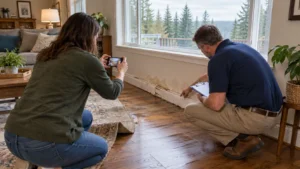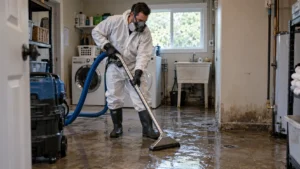
Condo HOA Water Damage in Seattle: Who’s Responsible and Who to Call
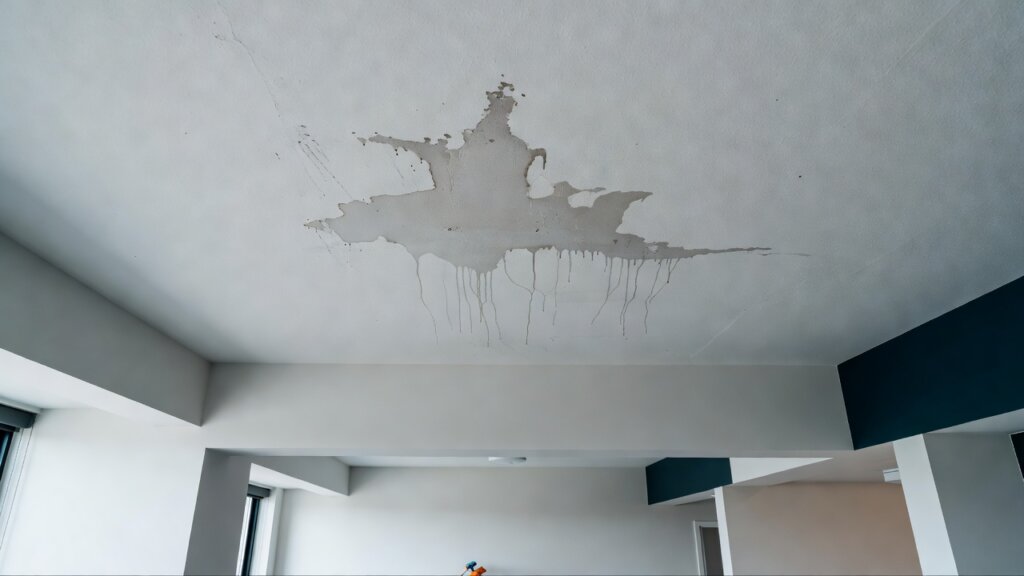
Water starts dripping through your ceiling at 11 PM. You live in a Seattle condo. The unit above you has a leaking washing machine — and now your hardwood floors are soaking up water that was never yours to deal with. Before anyone figures out who is responsible, the water keeps moving.
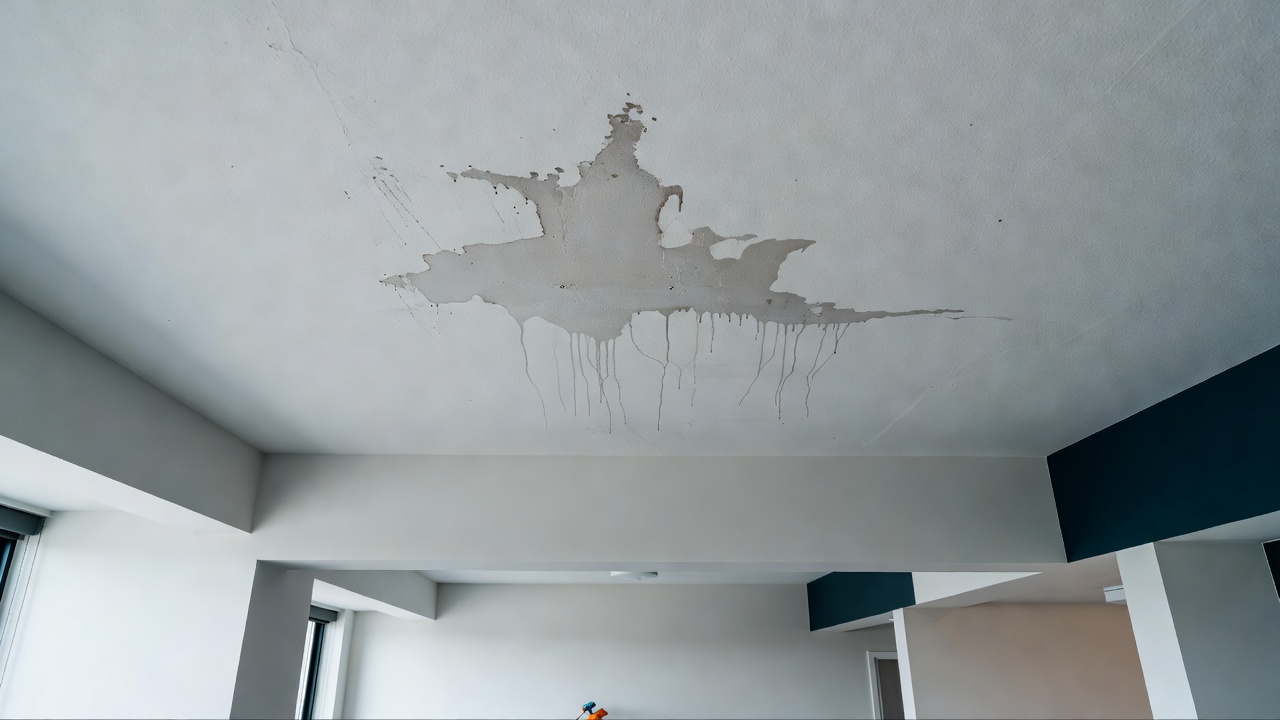
That liability question has a complicated answer in multi-unit buildings. And while you’re sorting it out, moisture is migrating into wall cavities and subfloors where it will stay until someone extracts it.
This guide breaks down how condo and HOA water damage works in Seattle — who owns the damage, how insurance fits in, and why calling a certified restoration team fast matters more than resolving the liability question first.
In a condo or HOA water damage situation, liability depends on your governing documents — but the drying clock doesn’t wait for legal clarity. Getting a certified restoration team on-site quickly protects everyone involved, regardless of who ultimately pays.
Understanding HOA vs. Unit Owner Responsibility for Water Damage
Responsibility for condo water damage is determined by where the water originated and what your governing documents say — not by who got wet. Most Seattle condo associations operate under a Declaration of Covenants, Conditions, and Restrictions (CC&Rs) that draws a line between common-area property and individually owned unit space. The legal framework governing these boundaries in Washington State is the Washington Condominium Act (RCW 64.34), which defines owner and association obligations for maintenance and damage liability.
Generally speaking, the HOA owns the building envelope: the roof, exterior walls, hallways, shared plumbing stacks, and common mechanical systems. Unit owners own everything inside their unit boundaries — which usually means interior walls, flooring, fixtures, and appliances.
How Seattle Condo Governing Documents Define the Damage Boundary
The exact boundary varies by building. Some CC&Rs use a “bare walls” standard, where the HOA owns only the structural shell. Others use an “all-in” standard that includes original fixtures and finishes inside the unit. A few fall somewhere in between.
Why does this matter? Because a pipe that runs through a shared wall might be HOA property in one building and unit-owner property in another. Before assuming who owes what, the governing documents have to be read — ideally by your property manager or an attorney familiar with Washington State condo law under RCW 64.34.
Common Water Damage Scenarios in Seattle Condos and HOAs
- Upstairs unit appliance leak — A washing machine, dishwasher, or refrigerator water line fails and saturates the floor below. The unit owner above is typically responsible.
- Shared plumbing stack failure — A pipe that serves multiple units bursts or backs up. This usually falls under HOA responsibility since the pipe is common-area infrastructure.
- Roof leak into top-floor units — The roof is almost always HOA property. If a Seattle rainstorm drives water through a failing membrane or flashing, the association typically owns that repair.
- Balcony or deck drainage failure — Balconies are a gray area. Some governing documents assign them to the unit owner; others treat them as limited common elements under HOA maintenance.
- HVAC condensation or drain pan overflow — If the unit’s HVAC is individually owned, the unit owner is responsible. If it’s part of a shared system, the HOA may be liable.
When Negligence Changes the Equation
Even when a leak originates in common-area plumbing, negligence can shift responsibility. If an HOA was notified of a failing pipe and failed to act, that inaction can expose the association to liability for resulting damage. Conversely, if a unit owner caused a leak through a modification they made without approval, the HOA may pursue them for the cost of repairing common areas.
Washington State courts have addressed these disputes in various forms, and the outcomes consistently come back to the same factors: what the governing documents say, what each party knew, and what actions were or weren’t taken.
Condo Roof Repair and Water Intrusion from Above
Roof-related water damage is one of the most common HOA disputes in Seattle. The city’s wet winters and frequent atmospheric river events put real stress on roofing membranes, flashing, and drainage systems — especially on older condo buildings constructed before modern waterproofing standards.
What Happens When a Condo Roof Leaks
When a Seattle condo roof fails, water doesn’t just damage the top floor. It can travel laterally through insulation, accumulate in ceiling cavities, and appear as a stain or drip two or three units away from the actual breach. By the time a resident notices it, the moisture has often been present long enough to begin supporting mold growth.
The HOA’s obligation is to repair the roof itself. But the downstream damage — saturated drywall, wet insulation, compromised flooring — requires a separate response from a water damage restoration team, not a roofing contractor.
Condo Roof Repair in Seattle vs. Water Damage Restoration
| What Needs to Happen | Who Does It | Who Typically Pays |
|---|---|---|
| Stop the roof from leaking (temporary tarping, permanent repair) | Roofing contractor | HOA |
| Extract standing water inside the unit | Water damage restoration company | HOA or unit owner (per CC&Rs) |
| Dry structural materials (walls, subfloor, framing) | Water damage restoration company | HOA or unit owner (per CC&Rs) |
| Test and remediate mold if present | Certified mold remediation company | Depends on origin and negligence |
| Restore finishes (drywall, paint, flooring) | General contractor | Depends on governing documents |
These are separate scopes of work. A roofing company stops the source. A restoration company handles what the water already did inside.
How Insurance Works in Seattle Condo Water Damage Claims
Insurance coverage in condo situations involves at least two policies — and sometimes three. Understanding which policy responds to which damage is essential before anyone files a claim.
HOA Master Policy Coverage
Most HOA associations carry a master insurance policy that covers the building structure, common areas, and shared systems. Depending on the policy type, it may also cover original fixtures inside units (an “all-in” or “single entity” policy) or only the bare structure (a “bare walls” policy).
When damage originates from a common-area source — a shared pipe, the roof, a lobby sprinkler system — the HOA master policy is typically the first to respond for structural and common-area damage.
Unit Owner’s HO-6 Policy
Unit owners in condos should carry an HO-6 policy, which covers personal property, interior improvements, and loss of use. This policy fills the gap between what the HOA master policy covers and what the unit owner actually owns or has improved.
If the HOA’s master policy operates on a bare-walls basis, the unit owner’s HO-6 is responsible for flooring, cabinetry, fixtures, and any upgrades made since the original build. This is where many condo owners get caught short — they assumed the HOA policy covered more than it does.
Does Renters Insurance Cover Water Damage?
Renters insurance covers personal property — furniture, electronics, clothing, and similar belongings — when they’re damaged by a covered peril like a sudden and accidental water leak from an upstairs unit. What renters insurance does not cover is the structure itself. Walls, floors, and ceilings are the property owner’s responsibility, not the tenant’s.
If you’re renting a condo unit in Seattle and an upstairs neighbor’s leak damages your belongings, your renters policy should respond for your personal property. The structural drying and restoration is a matter between the unit owner and the HOA.
“The structure is always someone else’s problem when you’re renting — but your belongings are yours to protect. Renters insurance is the gap-filler that most tenants don’t think about until after a leak.”
When the Neighbor’s Liability Policy Comes Into Play
If the damage was caused by a neighbor’s negligence — a washing machine left running unattended, a bathtub overflow, a plumbing modification gone wrong — their homeowner’s or HO-6 liability coverage may be responsible for your damage. This is where the claims process gets complicated, and where having a restoration company that works directly with insurance carriers becomes genuinely useful. Contact Premier at office@premierwaterremoval.com or (253) 400-5633 to get a team on-site before the claims process stalls.
Fire, Smoke, and Water Damage Restoration in Condo Buildings
Water damage in a condo isn’t always from a pipe or the rain. Fire suppression systems, firefighting efforts, and even smoke damage that triggers condensation can all introduce significant moisture into a multi-unit building.
Sprinkler System Discharge and Firefighting Water
When a fire suppression system activates — even in a single unit — the water volume released can saturate multiple floors. Firefighting efforts add to that. The result is often a building-wide water damage event affecting units that had no connection to the fire itself.
In these situations, the HOA master policy typically takes the lead on structural damage across the building. Individual unit policies respond to personal property and unit-specific improvements. The restoration scope is significant: extraction, structural drying, dehumidification, and mold prevention across multiple units simultaneously.
Smoke and Soot Residue After a Fire
Smoke and soot travel through shared ventilation systems, around door frames, and through electrical conduits. Even units far from the fire origin may have contamination that requires professional assessment. This is a restoration scope, not a cleaning scope — the distinction matters for insurance purposes and for ensuring the work is done correctly.
Who Should Make the Call When Water Damage Happens
Here’s where most condo water damage situations go wrong: everyone waits for someone else to call. The unit owner waits for the HOA. The HOA waits for the property manager. The property manager waits for an insurance adjuster. Meanwhile, water is migrating into wall cavities and subfloors where it will stay until someone extracts it.
The Right Call Order for Condo Water Damage
- Stop the source if possible. Shut off the water supply to the affected unit or appliance. If the source is in a common area, contact building management immediately.
- Call a restoration company. Get an IICRC-certified team on-site to begin extraction and moisture assessment. This protects the property and documents conditions for the insurance claim. IICRC certification standards are maintained and verifiable at iicrc.org.
- Notify the HOA or property manager. They need to know regardless of who is ultimately responsible. Many CC&Rs require prompt notification under RCW 64.34.
- Contact your insurance carrier. File the claim with your own policy first. Your insurer can pursue subrogation against the responsible party if applicable.
- Document everything. Photos, moisture readings, and the restoration company’s written assessment all become evidence in the claims process.
Do not wait for liability to be resolved before calling for restoration. Water damage compounds rapidly. The cost of delay is almost always greater than the cost of acting before the paperwork is sorted.
Why the Restoration Company Should Be IICRC Certified
In a multi-party insurance situation, the quality of the restoration documentation matters. IICRC-certified technicians follow established drying standards — maintained and verifiable at iicrc.org — produce psychrometric reports, and document moisture readings in a format that insurance adjusters recognize and accept. This is not a situation where cutting corners on the restoration provider saves anyone money — it typically creates disputes and delays instead.
Premier Emergency Water Removal‘s IICRC-certified technicians have served the Puget Sound region since 1998, and the team works directly with major insurance carriers on billing and claims documentation. When the adjuster asks for the drying logs, they’re already prepared.
Mold Risk in Seattle Condos After Water Damage
Seattle’s climate makes mold a near-certain outcome of any water damage that isn’t addressed quickly. The region’s mild temperatures and persistent humidity create conditions where mold can begin establishing in as little as 24 to 48 hours after a moisture event.
Where Mold Hides in Multi-Unit Buildings
In condo buildings, mold doesn’t just grow where the water pooled. It follows the moisture path: behind baseboards, inside wall cavities between units, under flooring, and inside ceiling assemblies. Because condo walls often share insulation between units, a leak in one unit can produce mold growth that affects the adjacent unit’s air quality before either resident notices a visible sign.
Mold Remediation and HOA Responsibility
If mold develops because the HOA delayed repairing a known roof leak or shared plumbing failure, the association may bear responsibility for the remediation cost — not just the structural repair. Under Washington State law (RCW 64.34), negligent failure to maintain common elements can create liability for consequential damages, including mold remediation in affected units.
If the mold developed because a unit owner delayed reporting a leak or failed to mitigate damage after discovery, the analysis shifts. Prompt reporting and prompt action protect everyone’s position.
Commercial Water Damage in Seattle HOA and Mixed-Use Buildings
Many Seattle condo buildings include ground-floor commercial space — retail, office, or restaurant tenants — beneath residential units. When water damage occurs in these buildings, the commercial tenant’s lease and the HOA’s governing documents both come into play.
Commercial Restoration Scope in Mixed-Use Properties
Commercial water damage restoration involves larger square footage, more complex building systems, and business-interruption considerations that residential restoration doesn’t. A restaurant or office that can’t operate while drying equipment runs is losing revenue, which adds urgency and complexity to the claims process.
Premier Emergency Water Removal handles commercial restoration across the Seattle metro area, including mixed-use properties in King, Pierce, and Kitsap counties. The team is experienced with the documentation requirements that commercial insurance policies and business-interruption claims demand.
Premier Emergency Water Removal Serves Seattle Condos and HOA Properties
Condo water damage situations are more complicated than single-family home events. Multiple insurance policies, shared ownership structures, and governing documents all intersect — and none of that complexity slows down the water.
Premier Emergency Water Removal is a family-owned, locally operated restoration company serving Seattle, Bellevue, Auburn, Tacoma, Olympia, and the broader Puget Sound region since 1998. The team holds IICRC certification, BBB Accreditation, and Google Guaranteed status. With 24/7 emergency dispatch and a target to be on-site within approximately 60 minutes, Premier responds when the situation is still controllable.
The company works directly with major insurance carriers — handling billing and claims documentation so property managers, HOA boards, and unit owners don’t have to manage that process alone. Rated 4.4 stars across 105 reviews, the team has built its reputation on consistent, documented restoration work across the Puget Sound.
“Whether the leak is from the roof, the unit above, or a shared pipe in the wall — our job is to stop the damage from getting worse while the liability question gets sorted. That’s what serving this region since 1998 looks like.”
If you’re dealing with water damage in a Seattle condo or HOA property — as a unit owner, property manager, or HOA board member — schedule your free moisture analysis today by calling (253) 400-5633 or emailing office@premierwaterremoval.com. Premier Emergency Water Removal serves King, Pierce, Kitsap, Mason, and Thurston counties, 24 hours a day, seven days a week.
Frequently Asked Questions: Condo HOA Water Damage in Seattle
- Who is responsible for water damage in a Seattle condo — the unit owner or the HOA?
- Responsibility depends on where the water originated and what your CC&Rs say. Under the Washington Condominium Act (RCW 64.34), HOAs are generally responsible for common elements — shared plumbing stacks, the roof, hallways, and the building envelope. Unit owners are responsible for everything within their unit boundaries, including interior fixtures, appliances, and flooring. When negligence is involved, responsibility can shift regardless of where the water started.
- Does renters insurance cover water damage in a Seattle condo?
- Renters insurance covers personal property — furniture, electronics, and clothing — damaged by a sudden and accidental leak from an upstairs unit or similar covered peril. It does not cover the structure itself. Walls, floors, and ceilings are the property owner’s responsibility. Structural drying and restoration is handled between the unit owner and the HOA.
- How quickly can mold develop after water damage in a Seattle condo?
- In Seattle’s mild, humid climate, mold can begin establishing within 24 to 48 hours of a moisture event. In multi-unit buildings, mold follows the moisture path into wall cavities, under flooring, and inside ceiling assemblies — often affecting adjacent units before any visible sign appears. Immediate extraction and structural drying by an IICRC-certified team is the most effective way to prevent mold growth after water damage.
- What certifications should a condo water damage restoration company have?
- Look for IICRC certification — verifiable at iicrc.org — which ensures technicians follow established drying standards and produce psychrometric reports that insurance adjusters recognize. BBB Accreditation and Google Guaranteed status are additional indicators of accountability. In multi-party insurance situations, certified documentation reduces claim disputes and delays.
Related pages
Condo HOA Water Damage in Seattle: The Right Call Order — Step-by-step action sequence for condo and HOA water damage situations — from stopping the source to filing the claim infographic for Premier Water Removal