
24/7 Water Damage Restoration & Mold Removal in Seattle, WA
Receive a FREE Moisture Analysis. Use the form below or call us at (253) 400-5633 Today!






A City Built on Hills, Surrounded by Water, and Held Together by Plumbing That's Older Than Most of Its Residents
Seattle has been called a city of neighborhoods — more than 80 of them, spread across hills, waterfronts, valleys, and everything in between. From floating homes on Lake Union to century-old brick buildings in Pioneer Square, from glass towers rising in South Lake Union to Craftsman bungalows tucked into the slopes of Queen Anne, the sheer variety of property types here is unlike anything else in the Pacific Northwest.
That variety also means the water damage risks are different on nearly every block. A Belltown high-rise and a Rainier Valley rambler don’t flood the same way, don’t dry the same way, and don’t require the same equipment or expertise to restore. A company that treats every Seattle job like the last one is going to miss something.
Premier Water Removal has been restoring properties across the Greater Seattle area since 1998. We’ve worked in basements that filled from groundwater surfacing through the foundation. We’ve dried out floating homes after a storm pushed lake water over the rail. We’ve responded to sprinkler malfunctions on the 30th floor of a downtown tower. Seattle throws variety at us, and we’ve learned to handle all of it — because that’s what this city demands.
What Makes Seattle One of the Hardest Cities to Restore
A City Squeezed Between Two Bodies of Water
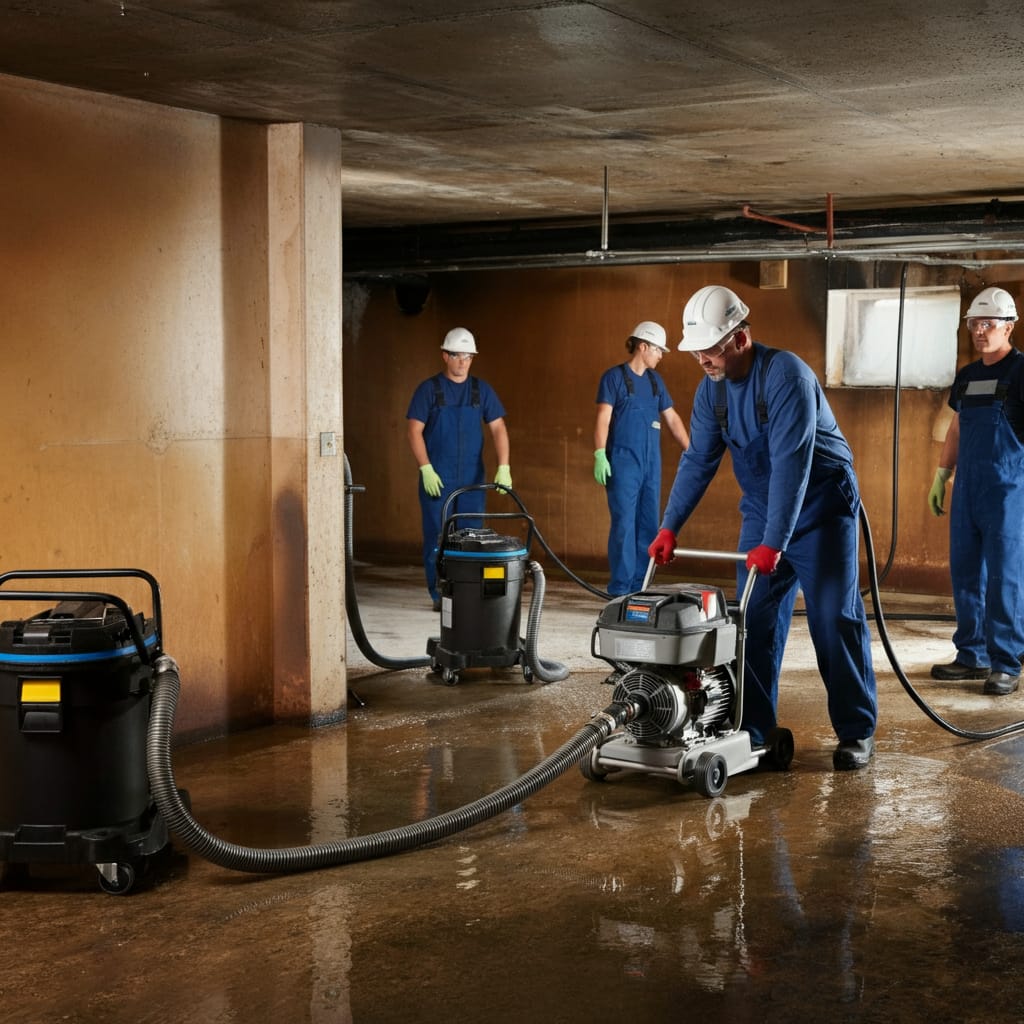
Seattle sits on a narrow isthmus between Puget Sound to the west and Lake Washington to the east, with Lake Union carved into its center. That geography means water pressure comes from multiple directions — tidal influence along Elliott Bay, lake-level fluctuations to the east, and groundwater pushing upward in low-lying neighborhoods like Georgetown, South Park, and the Duwamish corridor. Add 37 inches of annual rainfall on top of that, and the math becomes clear: water finds its way in, one way or another.
Hills, Slopes, and Landslide Zones
Seattle’s topography is famously steep. Queen Anne, Capitol Hill, Magnolia, Beacon Hill, West Seattle — these neighborhoods were built on ridgelines and bluffs that shed runoff quickly when it rains. That fast-moving water erodes soil, saturates hillsides, and creates the conditions for landslides — something the city tracks closely through its Environmentally Critical Areas program. For homes at the bottom of these slopes, the risk isn’t just rain coming down. It’s soil, groundwater, and stormwater all converging on foundations and crawl spaces that weren’t designed for the load.
Combined Sewer Overflows
Here’s something most Seattle homeowners don’t think about until it’s in their basement: large parts of the city — especially older neighborhoods — still use a combined sewer system where stormwater and sewage share the same pipes. During heavy rain, those pipes fill beyond capacity. When that happens, the mixture of stormwater and raw sewage has to go somewhere. Sometimes it discharges through overflow points into waterways. Other times, it backs up through floor drains and plumbing fixtures into homes and businesses. King County has been investing in upgrades, but the system still has around 90 outfall points across Seattle, and backups during major storms remain a real threat.
Aging Infrastructure Behind Every Wall
Seattle’s building boom may fill the skyline with cranes, but underneath those new towers, the city’s residential plumbing tells a different story. Many homes in Ballard, Wallingford, Fremont, the Central District, and Beacon Hill still have galvanized steel or cast iron pipes that were installed 60 to 80 years ago. These pipes corrode slowly, build mineral deposits inside, and eventually fail — sometimes as a slow weep behind a wall, other times as a sudden rupture that floods a kitchen in minutes. Tree root intrusion through aging sewer laterals is another persistent cause of backups, especially in Seattle’s tree-canopied residential neighborhoods.
Groundwater That Surfaces Without Warning
In certain parts of Seattle, groundwater moves through shallow aquifers and can surface at street level — particularly after extended wet periods. This phenomenon isn’t limited to low-lying areas. It can affect hillside properties where underground water hits impermeable soil layers and redirects laterally into basements and crawl spaces. Seattle Public Utilities tracks these issues, but for homeowners, the first sign is usually water where it shouldn’t be and no obvious source.
Restoration Services for Every Type of Seattle Property
Water Damage Restoration
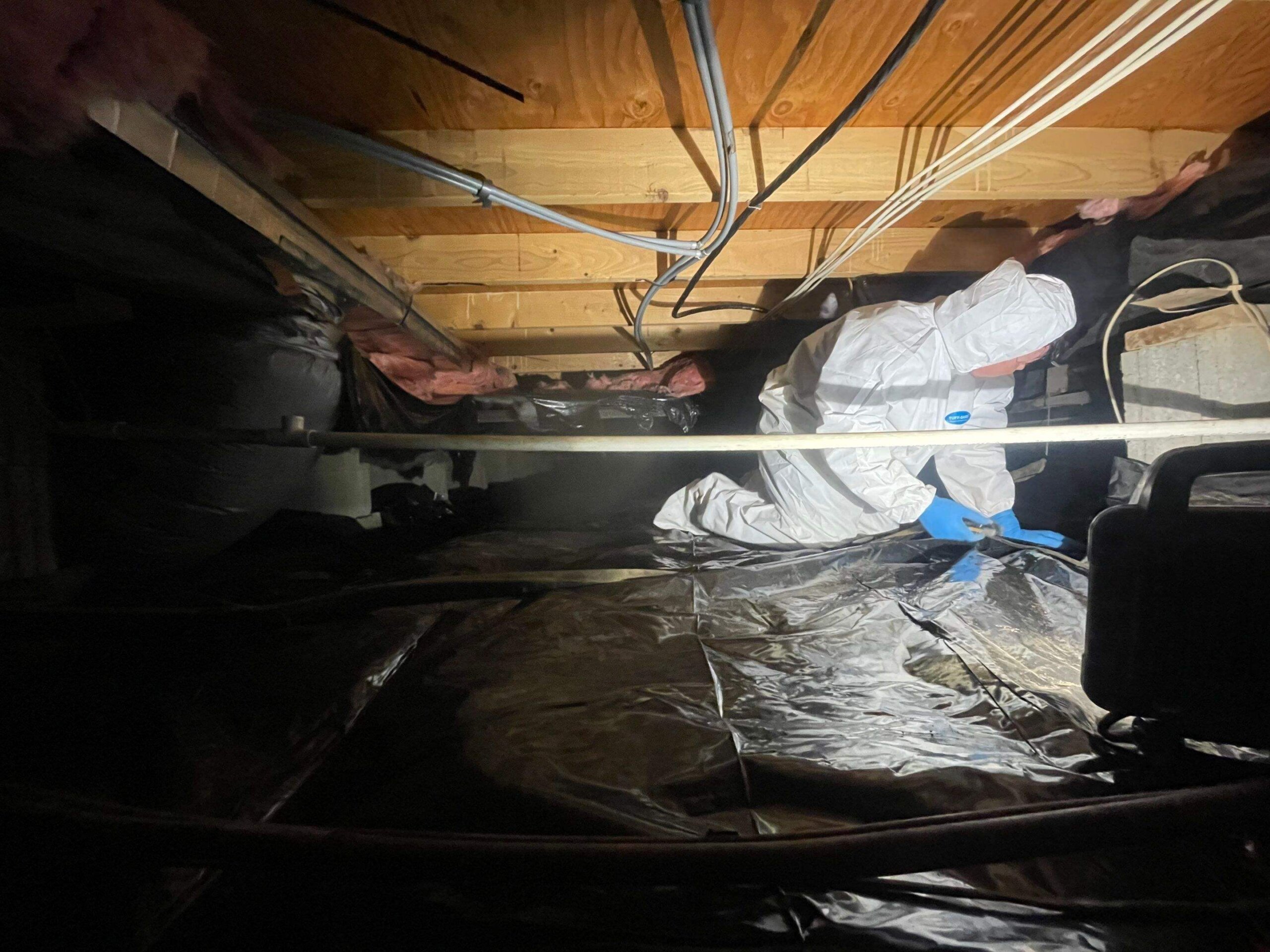
The first 24 hours after water enters a property determine how much of it can be saved and how much needs to be replaced. That’s true whether we’re responding to a frozen pipe burst in a Wallingford Craftsman, a roof leak in a Capitol Hill apartment building, or stormwater flooding in a Georgetown workshop.
We deploy infrared thermal cameras to trace moisture through walls, ceilings, and structural cavities — because in a city with this much old construction, water rarely stays where you can see it. Extraction starts immediately with truck-mounted pumps capable of removing hundreds of gallons per hour. Then we place commercial air movers and low-grain refrigerant dehumidifiers in a configuration specific to the room layout, construction type, and ambient conditions. In Seattle’s persistently damp climate, generic drying setups don’t work. The humidity fights you every step of the way unless your equipment is purpose-built for it.
We monitor moisture levels at multiple checkpoints daily and adjust our setup as conditions change. The job isn’t done when the floor looks dry — it’s done when the instruments confirm it. Learn more about Water Damage Restoration.
Mold Remediation
Seattle’s climate is almost purpose-built for mold. Cool temperatures, minimal sunlight for half the year, and relative humidity that rarely drops below 70% during the wet months create conditions where mold can colonize a damp wall cavity in two to three days. Bathrooms with inadequate ventilation, crawl spaces without vapor barriers, attic insulation with condensation issues, and any surface that’s experienced even minor water exposure — these are the sites we find active growth most often.
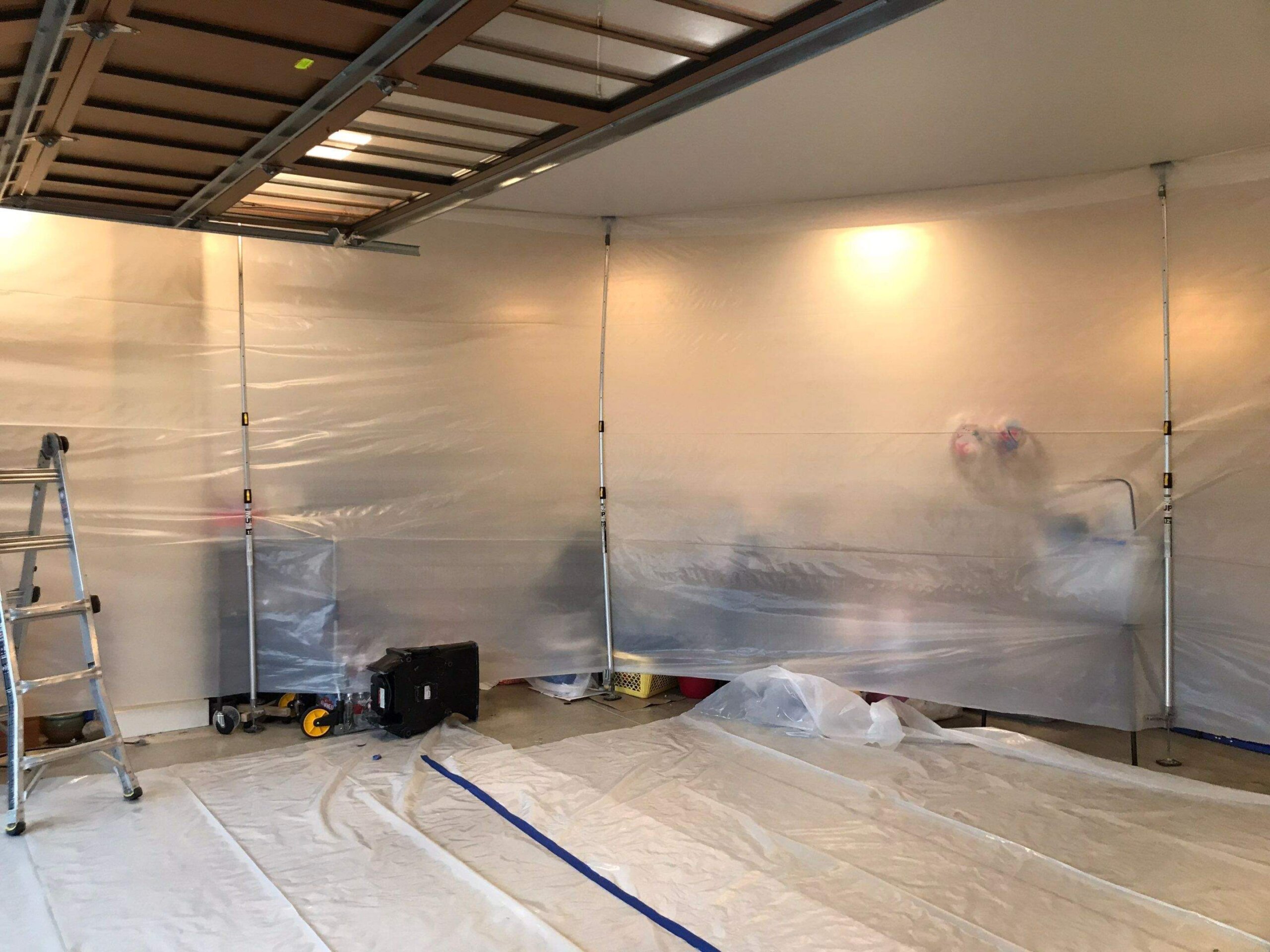
We contain the affected area with sealed polyethylene barriers and negative air pressure before any removal begins. HEPA-filtered air scrubbers run throughout the process to capture airborne spores. Contaminated materials are removed, and remaining surfaces are treated with professional-grade antimicrobials. Then we address the root cause — whether that’s a grading problem outside, a ventilation deficiency, a plumbing leak, or all three. We’ve seen every combination in this city. Discover our Mold Remediation Services.
Fire and Smoke Damage Restoration
Fires in Seattle’s dense residential and commercial neighborhoods bring complications that rural or suburban fires don’t. Shared walls in townhomes and row houses mean smoke migrates into neighboring units through party walls and shared ductwork. In older brick and timber buildings — common in Pioneer Square, Capitol Hill, and the Central District — soot penetrates deep into porous masonry and original woodwork.
Our fire restoration team removes structural debris, cleans soot and smoke residue from all affected surfaces, and treats indoor air with hydroxyl generators, ozone equipment, and thermal fogging to neutralize embedded odors. For properties with heavy damage, we coordinate reconstruction with licensed contractors and maintain a documentation package that covers your insurance requirements from the first photo to the final walkthrough. Explore Fire Damage Cleanup Services.
Sewage Backup
In a city with combined sewer infrastructure, sewage backups during storms aren’t just plumbing problems — they’re public health events. When sewage-contaminated water enters a home through floor drains, toilet connections, or failed backwater valves, the contamination isn’t limited to the visible puddle. It penetrates carpet pad, drywall, insulation, and subfloor materials that become biohazard waste.
We respond to every sewage call in full protective equipment and follow Category 3 biohazard protocols regardless of the apparent severity. Contaminated materials are removed, hard surfaces are disinfected with hospital-grade solutions, and HEPA air filtration runs until airborne contaminant levels clear. In Seattle, where combined sewer backups can introduce a mixture of stormwater and raw sewage, thorough decontamination isn’t optional — it’s the minimum standard. Learn more about Sewage Cleanup.
Biohazard Cleanup
When a situation calls for discretion, sensitivity, and strict safety protocols, our certified biohazard team handles it. We follow established containment and disposal procedures, restore affected spaces to safe condition, and treat every job with the care the circumstances require. Learn more about Biohazard Cleanup Services
Why Seattle Property Owners Choose Us Over the National Chains
We Know This City’s Building Stock
Seattle isn’t one city — it’s dozens of micro-markets stitched together, each with its own architectural history and infrastructure quirks. We’ve dried out floating homes on Portage Bay, restored fire-damaged Craftsman interiors in Mount Baker, extracted water from below-grade units in new Ballard mid-rises, and pulled standing sewage out of basements in Columbia City after a combined sewer backup. That breadth of experience matters because the approach that works in a 2020 concrete-and-steel building will damage a 1910 plaster-and-timber house if applied without adjustment.
We Respond Fast, Across the Entire City
Seattle traffic is unpredictable, and a restoration company that’s 90 minutes away when you need them in 30 isn’t much help. We maintain response capacity that covers Seattle from Northgate to Rainier Beach, from Magnolia to Lake City. In most conditions, our crews arrive within 30 to 45 minutes of your call — and we take calls around the clock, every day of the year.
Our Equipment Doesn’t Quit in Seattle’s Humidity
Standard dehumidifiers lose efficiency when ambient humidity is high — which in Seattle means roughly eight months out of twelve. We run low-grain refrigerant dehumidifiers that continue pulling moisture at full capacity even in saturated air conditions. Combined with commercial air movers, infrared moisture mapping, and daily instrument-based monitoring, our drying protocol is engineered for the Pacific Northwest, not adapted from a national template written for drier climates.
Insurance Documentation That Actually Works
We’ve filed claims with every major carrier active in King County. Our documentation includes timestamped moisture readings, thermal images, equipment placement records, daily monitoring logs, and a written scope of loss. This package isn’t assembled after the fact — it’s built in real time as the job progresses. Our project managers can walk you through the claims process, explain what your policy typically covers, and help you avoid the delays that come from incomplete or inconsistent paperwork.
Seattle Neighborhoods We Serve
We provide emergency response and scheduled restoration services across all of Seattle’s neighborhoods. Here’s a snapshot of the areas we work most frequently:
North Seattle: Northgate, Lake City, Bitter Lake, Broadview, Haller Lake, Pinehurst, Maple Leaf, Roosevelt, Ravenna, Bryant, View Ridge, Wedgwood, Sand Point
Northwest Seattle: Ballard, Fremont, Phinney Ridge, Greenwood, Crown Hill, Sunset Hill, Blue Ridge, Loyal Heights, Whittier Heights
Central Seattle: Queen Anne (Upper and Lower), Magnolia, Interbay, South Lake Union, Belltown, Downtown, Capitol Hill, First Hill, Madison Valley, Madrona, Leschi, Central District
West Seattle: Alki, Admiral, North Admiral, Junction, Fauntleroy, Gatewood, Arbor Heights, Delridge, Highland Park, Riverview
South Seattle: Beacon Hill, Columbia City, Rainier Beach, Seward Park, Mount Baker, Georgetown, South Park, Brighton, Dunlap, Rainier Valley
Northeast Seattle: Laurelhurst, Montlake, University District, Wallingford, Green Lake, Tangletown, Hawthorne Hills, Windermere
We also serve Shoreline, Burien, Tukwila, SeaTac, and Mercer Island.
Licensed, Certified, and Built for Seattle’s Code Requirements
Our restoration technicians carry current IICRC certifications in water damage restoration, applied structural drying, mold remediation, and fire and smoke restoration. We also hold biohazard cleanup certification and complete annual continuing education in environmental safety protocols.
Seattle’s permitting requirements for restoration and reconstruction work are among the strictest in the state. We coordinate with the Seattle Department of Construction and Inspections (SDCI) on projects that involve structural repair, and we’re familiar with the Environmentally Critical Areas code that applies to properties on or near steep slopes, slide-prone areas, and designated flood zones. Compliance isn’t something we figure out after the job starts — it’s baked into how we plan every project.
How a Job Works With Us
Call anytime
(253) 400-5633 — 24 hours, 7 days. Tell us what's happening, give us your address, and we'll dispatch a team immediately.
We assess the real scope
A Project Manager arrives with professional moisture detection instruments — infrared cameras, penetrating and non-penetrating meters, hygrometers. We don't eyeball it. We measure everything, photograph it, and build a dry-out plan based on the actual conditions inside your property.
We execute and communicate
Our crew sets up extraction and drying equipment, removes damaged materials where necessary, and monitors progress daily. You get updates at every stage. We'll advise you on whether an insurance claim makes sense and provide the documentation your adjuster needs. When the numbers say it's dry, we walk through the results with you in person.
What Seattle Homeowners Want to Know
Can you actually reach me fast in Seattle traffic?
We can. We’ve positioned our response capacity to cover the full footprint of the city — north to south, waterfront to lake — and our dispatchers factor real-time traffic conditions into routing. For most Seattle neighborhoods, we’re on-site within 30 to 45 minutes. Even during rush hour or weather events, our familiarity with alternate routes across the city keeps response times consistent.
My basement floods every time it rains hard. Can you help with a recurring problem like that?
Yes, and honestly, this is one of the most common calls we get in Seattle. Recurring basement flooding is usually driven by one of a few causes: surfacing groundwater, failed or absent sump pump systems, clogged storm drain connections, or foundation cracks that allow water intrusion under hydrostatic pressure. We can extract the water, dry the space, and then help identify the underlying cause so you can make an informed decision about a permanent fix — whether that’s a sump pump installation, a drainage correction, or a foundation repair.
I live in an older home with galvanized pipes. Am I at higher risk?
Significantly, yes. Galvanized steel pipes corrode from the inside over time, narrowing the flow path and weakening the pipe walls. Homes built before the 1960s in neighborhoods like Ballard, Wallingford, Beacon Hill, and the Central District commonly still have these systems. A corroded pipe can fail suddenly — a full rupture under pressure — or fail slowly as a pinhole leak that saturates framing for weeks before anyone notices. If you have galvanized plumbing, we’d recommend having a plumber assess the system proactively. And if a failure does occur, call us immediately — the faster extraction begins, the more of your home’s interior we can save.
What’s the deal with combined sewer backups? Is that really a thing?
It is, and it’s more common in Seattle than most people realize. Older parts of the city use a combined system where stormwater and wastewater share the same pipes. When heavy rain exceeds the system’s capacity, that mixture can back up through floor drains and plumbing fixtures into basements and lower-level units. We treat every combined sewer backup as a biohazard event — full protective equipment, contaminated material removal, hospital-grade disinfection, and HEPA air filtration. If you’ve experienced one of these events, don’t attempt cleanup yourself. The health risk from sewage exposure is real.
I rent an apartment and my unit flooded from the unit above me. Who should I call?
Call us first to stop the damage from spreading, then notify your landlord or property management company. In multi-unit buildings, water from an upstairs leak can travel through floors, walls, and shared utility chases, affecting units that seem far removed from the original source. We coordinate with building management and HOAs regularly and can work within whatever access and authorization framework your building requires. The key is getting extraction started fast — waiting for approvals while water sits on your floors only makes the job bigger and more expensive.
How long does the drying process take in Seattle’s climate?
Longer than in drier parts of the country, which is why equipment selection matters so much here. A typical residential water damage job in Seattle takes 3 to 5 days of active drying, though severe cases or large commercial spaces can take longer. Our low-grain refrigerant dehumidifiers are specifically chosen for Pacific Northwest humidity levels, and we monitor daily with calibrated instruments rather than relying on how things look or feel. We don’t pull equipment until the data says it’s safe to do so.
Recent Premier Water Removal Reviews
We Pick Up the Phone — Day and Night
Fill Out The Form Below
🔒 We will not sell your information or spam you. Privacy policy
From Northgate to Rainier Beach, from Magnolia to Mercer Island — our Seattle team is on call 24/7/365.