Seattle’s unique topography and frequent rainfall create perfect conditions for basement water problems throughout the Puget Sound region. Understanding how to identify, prevent, and address basement water issues can save homeowners thousands in structural damage and protect their families from health hazards associated with prolonged moisture exposure.
The city of Auburn Washington and surrounding communities experience basement water intrusion regularly due to the region’s challenging climate conditions. When water enters your basement, swift action prevents minor issues from becoming major restoration projects.
Basement Leak Repair: What Seattle Homeowners Need to Know
Understanding Seattle’s Basement Water Challenges
Pacific Northwest homes face distinct water intrusion risks that differ from other regions. Our hilly terrain, combined with seasonal rainfall patterns and aging infrastructure, creates multiple pathways for water to enter basement spaces. Many Seattle-area homes were built before modern waterproofing standards, making them particularly vulnerable during heavy weather events.
Ground saturation during winter months raises the water table significantly. This hydrostatic pressure pushes groundwater through foundation cracks, concrete joints, and porous basement walls. Even small foundation defects become major problems when subjected to persistent moisture pressure.
Additionally, Seattle’s freeze-thaw cycles can worsen existing foundation cracks throughout winter months. Snow accumulation followed by rapid melting creates sudden water surges that overwhelm drainage systems and foundation waterproofing measures.
Basement Flooding: Common Causes and Warning Signs
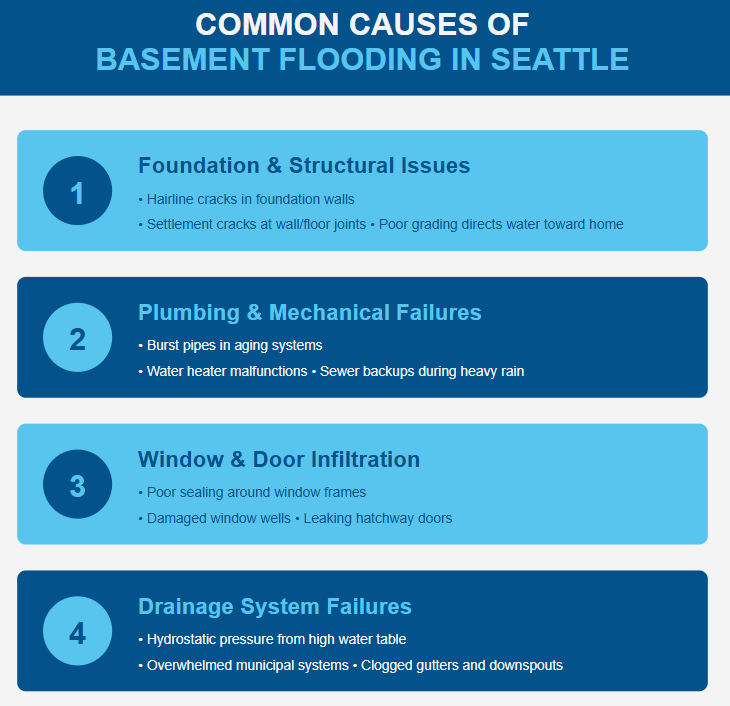
Understanding the various ways water enters basements helps homeowners take preventive action before emergencies occur. Seattle basements face multiple flooding risks that require different solutions.
Foundation and Structural Issues
Hairline cracks in foundation walls may seem insignificant but can channel substantial water volumes during storms. Concrete naturally develops small fissures over time, and Seattle’s soil conditions accelerate this process. Settlement cracks often appear where foundation walls meet basement floors, creating entry points for groundwater.
Poor exterior grading around homes directs surface water toward foundations instead of away from structures. Many older Seattle properties lack proper drainage systems, allowing water to pool around basement walls during heavy rainfall.
Plumbing and Mechanical Failures
Burst pipes represent the most common cause of sudden basement flooding. Seattle’s aging housing stock contains plumbing systems that may fail without warning. Water heaters, washing machines, and HVAC systems located in basements can malfunction and release significant water volumes rapidly.
Sewer backups during heavy rainfall events affect many Seattle neighborhoods. When municipal drainage systems become overwhelmed, contaminated water can enter basements through floor drains and utility connections.
Window and Door Infiltration
Basement windows and exterior doors provide additional water entry points during storms. Poor sealing around window frames or damaged window wells allow rainwater to accumulate and seep into basement spaces. Hatchway doors that lack proper waterproofing can channel water directly into lower levels.
Basement Water Cleanup: Immediate Response Steps
When basement water intrusion occurs, homeowners must act quickly to minimize damage and prevent health hazards. The first 24-48 hours determine whether cleanup remains manageable or becomes a major restoration project.
Safety First: Electrical Hazards
Never enter a flooded basement without ensuring electrical safety. Water and electricity create deadly combinations that require professional assessment. If your electrical panel is located in the affected area, contact qualified technicians before attempting any cleanup activities.
Turn off electricity to affected areas if you can safely access the main panel from a dry location. Avoid using electrical equipment in wet conditions, even if water levels appear minimal.
Water Removal and Documentation
Remove standing water as quickly as possible using appropriate pumps or extraction equipment. However, if outdoor flooding still affects your property, pump basement water at the same rate floodwaters recede to prevent structural damage from hydrostatic pressure differences.
Document all damage with photographs before beginning cleanup for insurance purposes. Focus on water levels, damaged materials, and visible contamination sources.
Initial Drying and Decontamination
Open all windows and doors to promote air circulation and moisture removal. Remove wet materials like carpeting, insulation, and damaged drywall promptly to prevent mold growth. Seattle’s humid climate accelerates mold development, making rapid material removal critical.
Begin dehumidification immediately using professional-grade equipment. Standard household dehumidifiers lack sufficient capacity for flood cleanup situations.
Professional vs. DIY: Understanding the Limitations
While homeowners can handle minor water cleanup tasks, several factors make professional intervention necessary for most basement flooding situations.
Health and Safety Concerns
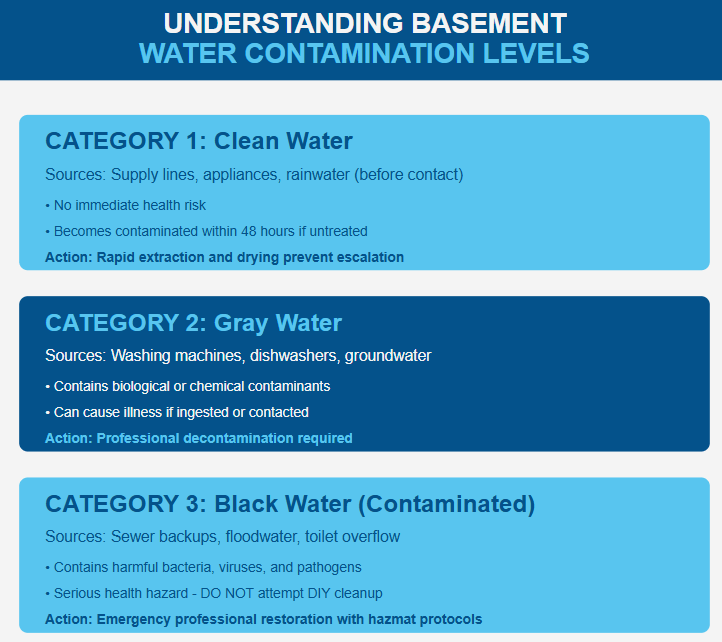
Contaminated water from sewer backups or outdoor flooding contains harmful bacteria and pathogens that require specialized handling. Even clean water becomes contaminated after contact with basement materials and creates health risks without proper decontamination protocols.
Mold growth begins within 24-48 hours in Seattle’s humid environment. Professional restoration teams use antimicrobial treatments and air quality testing to ensure complete decontamination.
Equipment and Expertise Requirements
Effective basement water cleanup requires industrial-grade extraction equipment, structural drying systems, and moisture detection tools that exceed typical homeowner resources. Professional restoration technicians understand the science of structural drying and can prevent hidden moisture problems that cause long-term damage.
Proper assessment identifies hidden water infiltration in wall cavities, insulation, and structural materials. Incomplete drying leads to ongoing mold problems and structural deterioration that costs significantly more than initial professional restoration.
Long-term Prevention Strategies
Preventing basement water problems requires comprehensive approaches that address multiple risk factors common in Seattle-area homes.
Exterior Water Management
Proper grading directs surface water away from foundations effectively. Ensure soil slopes away from your home’s foundation at minimum grades recommended by building codes. Clean and maintain gutters and downspouts regularly, extending downspouts at least six feet from foundation walls.
Consider installing French drain systems or foundation waterproofing membranes for homes with recurring water intrusion issues. These systems provide long-term protection against hydrostatic pressure and groundwater infiltration.
Interior Protection Systems
Sump pump installation provides essential protection for Seattle basements. Choose systems with battery backup capabilities to maintain protection during power outages that often accompany severe storms. Regular maintenance ensures reliable operation when needed most.
Basement dehumidification systems control moisture levels year-round, preventing condensation issues that contribute to mold growth and material deterioration.
Professional Assessment and Maintenance
Annual basement inspections identify potential problems before they become emergencies. Qualified technicians can detect early signs of water intrusion, foundation settlement, or drainage system failures that homeowners might miss.
Premier Water Removal serves the Puget Sound area with comprehensive basement water damage restoration services. Our IICRC-certified technicians understand the unique challenges Seattle homeowners face and provide solutions that address both immediate cleanup needs and long-term protection strategies.
The company’s experience serving the greater Seattle metropolitan area since 1998 means we understand local soil conditions, construction methods, and weather patterns that contribute to basement water problems. Our comprehensive approach includes emergency water extraction, structural drying, decontamination, and prevention recommendations tailored to Pacific Northwest conditions.
When to Call Professional Restoration Services
Certain basement water situations require immediate professional intervention to protect health and property. Contact certified restoration specialists when dealing with contaminated water sources, extensive flooding, or recurring moisture problems.
Professional teams respond 24/7 to minimize damage and begin restoration processes immediately. They coordinate with insurance providers to ensure proper documentation and coverage for restoration costs.
Quick professional response often reduces overall restoration costs by preventing secondary damage like mold growth, structural deterioration, and electrical system contamination that develop when cleanup delays occur.
Frequently Asked Questions
How quickly does mold grow in Seattle basements after water damage? Mold growth can begin within 24-48 hours in Seattle’s humid climate. The combination of moisture, organic materials, and warm temperatures creates ideal conditions for rapid mold development. Professional restoration within the first 24 hours prevents most mold problems.
What’s the difference between clean water and contaminated water basement flooding? Clean water comes from supply lines, appliances, or rainwater without contact with contaminated sources. Contaminated water includes sewer backups, groundwater, or floodwater that contains bacteria and pathogens. Contaminated water requires specialized decontamination protocols and poses serious health risks.
Can I use regular household equipment for basement water cleanup? Household wet vacuums and dehumidifiers lack sufficient capacity for effective basement flood cleanup. Professional extraction equipment removes water faster and more completely, while industrial dehumidifiers create proper drying conditions that prevent secondary damage.
How long does professional basement water cleanup take in Seattle? Timeline depends on damage extent and water source. Minor clean water incidents may require 3-5 days for complete drying, while contaminated water or extensive flooding can take 1-2 weeks. Seattle’s humidity can extend drying times, making professional equipment essential for efficient restoration.
What should I do if my basement floods repeatedly during Seattle’s rainy season? Recurring basement flooding indicates systemic drainage or waterproofing problems that require comprehensive solutions. Professional assessment can identify root causes and recommend permanent fixes like improved drainage systems, foundation waterproofing, or sump pump upgrades designed for Pacific Northwest conditions.