Water damage is one of the most common reasons people file home insurance claims in Washington. It also carries one of the highest denial rates of any claim type. The gap between a paid claim and a denied one often comes down to the first 48 hours. What you document, who you call first, and the words you use all matter. Here is how the process actually works.
Key Takeaways
- Sudden and accidental water damage is usually covered. Gradual leaks and outside flooding usually are not.
- Your insurer has 30 days to inspect, and you choose your own restoration contractor.
- Document everything before cleanup begins. Thin documentation is a leading reason claims get denied.
What Your Washington Policy Actually Covers
Coverage turns on one question. Was the damage sudden and accidental, or did it build slowly over time?
Sudden and Accidental Damage Is Usually Covered
A burst pipe qualifies. So does a ruptured water heater or a failed washing machine supply hose. Frozen pipes are covered too, provided you kept the home properly heated. Storm damage to your roof is covered, but only if you act quickly. The state regulator is blunt on that point. Your insurance will not cover water damage if you delay repairs.
Gradual Leaks Usually Are Not
A faucet that drips for months is a maintenance problem. So is water seeping through a cracked foundation or gaps between building materials. Insurers call this long-term seepage and deny it. Mold, rot and rust follow the same logic. They are excluded unless they came from water damage your policy already covers.
Flooding Needs Its Own Policy
Standard homeowners insurance never covers rising water from outside. That includes overflowing rivers, storm surge and groundwater pushing up through basement walls. Homeowners near the Green, Cedar or Duwamish rivers need separate flood coverage. That protection comes through the National Flood Insurance Program.
Why Puget Sound Claims Get Complicated
Two local factors turn straightforward losses into disputed ones.
The first is the region’s housing stock. Plenty of Seattle homes were built well before 1970, and many still carry galvanized supply lines or cast iron drains. When an aging pipe finally fails, insurers look hard at whether age caused it. Documenting the failure point protects you from a deferred maintenance argument.
The second is our weather pattern. Atmospheric rivers push heavy rain across the Puget Sound region for days at a time in autumn and winter. That rain finds roof flashing, clogged gutters and grading problems all at once. When rainwater and a plumbing failure overlap, the cause becomes contested. Insurers separate wind-driven rain, surface flooding and internal leaks into different coverage buckets. A moisture map that shows where water entered is often the deciding evidence.
Before You File, Ask Whether the Claim Is Worth It
Filing is not automatically the right move. A claim stays on your CLUE report for five to seven years. Insurers check that record when setting premiums or deciding whether to renew you. Water claims are treated as likely to repeat. Average rate increases after one commonly run 15% to 20%.
Run the math before you call. If repairs cost $2,400 and your deductible is $2,000, filing recovers $400. That small recovery can cost you far more across several renewal cycles.
There is a middle option most homeowners miss. You can ask your insurer whether a loss is covered without opening a claim. Say plainly that you are asking a coverage question, not reporting a loss.
The Water Damage Insurance Claim Washington State Timeline
Every claim runs on a clock, and most of it is set by state rule.
Step 1: Stop the Water and Limit the Damage
Shut off the supply at the valve or the main. Your policy requires you to prevent further damage. Move furniture and valuables out of standing water. Do not begin demolition yet.
Step 2: Document Everything Before Cleanup
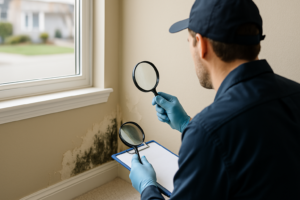
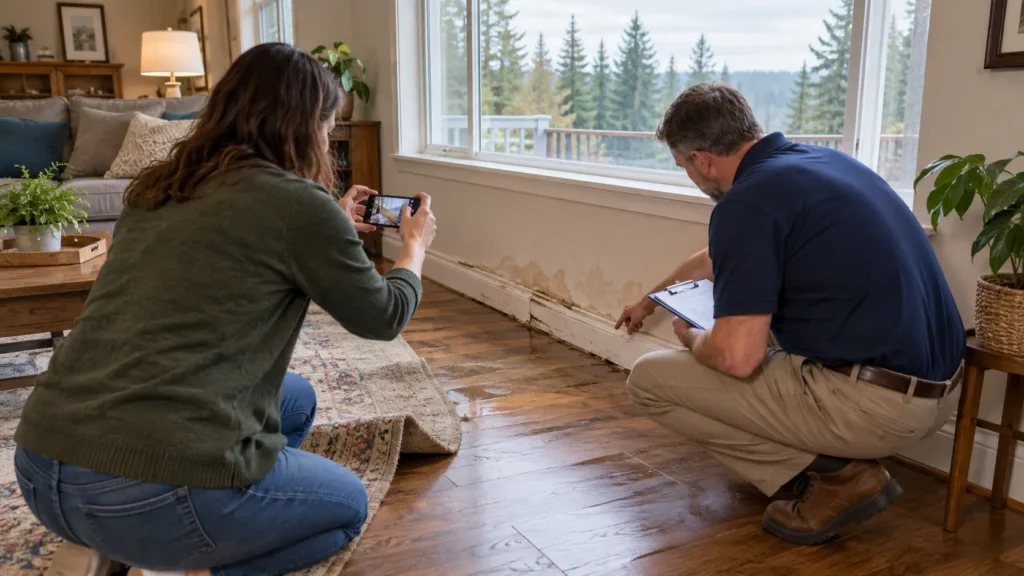
Photograph and film every affected room before anything is touched or thrown away. Record make, model and serial numbers for damaged appliances and electronics. Keep physical samples of ruined carpet, pad and flooring. Save every receipt, including fans, dehumidifiers and hotel nights.
Step 3: Report the Loss Promptly
Late reporting hands your insurer an easy denial. Call as soon as the damage is stable and documented. Describe the cause precisely. Calling a plumbing failure a “flood” can push your claim into an excluded category.
Step 4: Get an Independent Scope of the Damage
Moisture travels behind walls and under flooring where cameras cannot see it. A restoration contractor can take moisture readings and map the true extent. That scope becomes evidence when the adjuster prices your loss. Premier Water Removal’s insurance claim support page explains how that documentation fits into the process.
Step 5: Meet the Adjuster and Review the Estimate
Walk the property with the adjuster and point out what you found. Read the estimate line by line before agreeing to anything. Missing line items are far easier to fix before payment than after.
Your Rights as a Washington Policyholder
This is where Washington homeowners have more leverage than they realize. Under state rules you are entitled to a clear explanation of coverage, a prompt response, and a timely claim decision. Those protections sit in WAC 284-30-330, 284-30-360 and 284-30-380. Your insurer has 30 days from your filing date to inspect the damage.
Two rights matter most in practice. If you disagree with the amount of your loss, you can demand an appraisal. And you select the contractor who repairs your home. Your insurer may suggest a preferred vendor list, but you are under no obligation to use it. The Washington Office of the Insurance Commissioner sets out these protections in full.
One caution before you sign anything. An “assignment of benefits” form can let a contractor negotiate and settle directly with your insurer, without your approval.
Why Water Damage Claims Get Denied
Denials rarely mean the damage was not real. They usually mean the paperwork told the wrong story. The most common reasons are consistent:
- Gradual seepage. The insurer argues the leak ran for weeks or months.
- Deferred maintenance. A corroded pipe that failed from age gets blamed on the owner.
- Wrong cause described. The word “flood” applied to an internal plumbing leak triggers an exclusion.
- Vacancy clauses. Many policies limit coverage after a home sits empty 14 to 30 days.
- Late reporting. Delay lets the insurer argue the damage worsened avoidably.
- Thin documentation. No photos, no moisture readings, no invoices, no leverage.
Every one of these is preventable in the first two days. That right to independent documentation matters in every water damage insurance claim Washington State homeowners file.
Flood Claims Follow a Different Process
If the water came from outside, your NFIP policy takes over, and the rules change. You must submit a signed Proof of Loss form, usually within 60 days of the flood. An adjuster typically contacts you within one to two days and inspects within two weeks. Ask to see their Flood Control Number card, dated for the current storm year.
Expect four to eight weeks before a flood claim is finalized and paid. Building damage is generally paid at replacement cost, while contents are paid at actual cash value. If you carry a mortgage, the check names both you and your lender. Between 2020 and 2024, the average NFIP claim was $82,614. You can review the full process through the NFIP’s official claim guidance. One detail catches Seattle homeowners out. NFIP policies do not pay for mold damage, so drying has to start fast.
Frequently Asked Questions
Is it worth filing an insurance claim for water damage?
Only when repair costs clearly exceed your deductible by a wide margin. A burst pipe that soaks several rooms is worth filing. A $300 overage above your deductible usually is not.
Why do insurers deny water damage claims?
Most denials rest on the argument that damage built up gradually rather than suddenly. Seepage exclusions, deferred maintenance and weak documentation drive the majority of them.
What water damage is never covered by homeowners insurance?
Outside flooding, groundwater seepage, sewer backups and slow leaks are excluded from standard policies. Sewer backup and sump pump failure can often be added by endorsement.
How much does insurance usually pay for water damage?
Industry averages land near $14,000 to $15,400 per claim. Minor localized damage often settles between $2,000 and $5,000, while multi-room losses regularly exceed $15,000.
Will my premium rise after a water damage claim?
Usually yes. Increases commonly run 15% to 20%, and you may lose a claim-free discount. The claim also stays on your CLUE report for five to seven years.
How long does a flood insurance claim take in Washington?
Roughly four to eight weeks from filing to payment. Repairs can run far longer. After a regional storm, Seattle contractors and materials both get scarce quickly.
Get the Damage Scoped Before You Call Your Insurer
The homeowners who get paid are the ones who documented the loss properly before cleanup started. Coverage in Washington rewards speed and precise language. Waiting quietly for an adjuster is what turns a covered loss into a disputed one.
Our water damage restoration team in Seattle records moisture readings and photographs every affected area. We then build the dry-out plan your adjuster will price. Premier Water Removal works with any insurance company licensed in Washington State. You are never obligated to use your insurer’s preferred vendor. Call (253) 400-5633 and a project manager can scope your situation before you file.