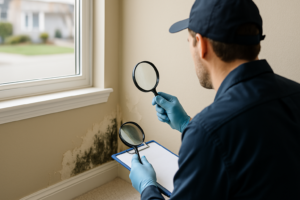
Flooded Basement: Who to Call and What to Do First
Six inches of water appeared in a Renton homeowner’s basement overnight after an atmospheric river dumped four inches of rain on the Puget Sound in under 24 hours. She called a plumber first. He arrived three hours later, confirmed the sump pump had failed, replaced it — and left. Nobody extracted the water. Nobody dried the framing. Three weeks later, she had black mold growing across two walls and a $14,000 remediation bill that her insurer disputed because she hadn’t documented the damage properly from the start.
That sequence of calls — plumber first, restoration company second, insurer third — is one of the most expensive mistakes Greater Seattle homeowners make. The right call order depends on what caused the flooding, what type of water you’re dealing with, and how fast you move. If you’re dealing with a flooded basement right now, call Premier Water Removal at any hour — we dispatch within 60 minutes across the Greater Seattle area.
This guide walks you through the decision sequence so you don’t repeat that mistake.
For most basement floods, call a water damage restoration company first. They extract water, document damage for insurance, and begin drying — all in one visit. A plumber is needed when the source is still actively leaking from a pipe or fixture. Sewage backup requires a specialized restoration crew, not a general plumber or a shop vac.
Water in Basement: Who to Call Near Me
The first call you make after a basement flood should match the cause of the flooding. Most homeowners default to a plumber because plumbing feels like the obvious culprit — but the majority of basement floods in the Pacific Northwest aren’t caused by broken pipes. They’re caused by groundwater intrusion, sump pump failure, or surface water backing up through floor drains. A plumber can’t fix any of those problems, and every hour you wait for the wrong professional is an hour water is soaking deeper into your framing, subfloor, and insulation.
Flooded Basement Cleanup Companies Near Me vs. a Plumber — Which Do You Need?
Here’s the simplest way to decide: Is water still actively entering the space from a broken pipe or fixture you can see? If yes, call a plumber first to stop the source, then immediately call a restoration company. If the source is already stopped — or if the water came from rain, groundwater, a failed sump pump, or a drain backup — skip the plumber entirely and call a water damage restoration company directly.
| Flood Source | First Call | Why |
|---|---|---|
| Burst pipe actively spraying water | Plumber | Stop the source first, then restore |
| Sump pump failure | Water damage restoration company | They extract water and can coordinate sump repair |
| Groundwater / rain intrusion | Water damage restoration company | Source is weather — extraction and drying are the priority |
| Sewage backup through floor drain | Water damage restoration company (sewage-certified) | Category 3 biohazard — requires specialized cleanup, not a plumber |
| Appliance leak (water heater, washer) | Water damage restoration company | Appliance can be shut off; water extraction is the urgent need |
| Roof or window well leak during storm | Water damage restoration company | Structural drying and documentation needed immediately |
Premier Water Removal has served the Greater Seattle area — including Auburn, Tacoma, Bellevue, and surrounding King, Pierce, and Kitsap counties — since 1998. Our IICRC-certified technicians bring 25+ years of Pacific Northwest experience to every job, and we’re BBB Accredited. In our experience, the homeowners who call restoration first consistently see lower total repair costs and smoother insurance claims than those who spend hours waiting for a plumber who can’t actually dry their basement.
Why the First 24 Hours Are the Deciding Factor
The IICRC S500 Standard for Professional Water Damage Restoration defines a clear timeline: within 24–48 hours of a water intrusion event, materials that were wet but salvageable cross into active mold-growth territory. In the Pacific Northwest, where ambient humidity already runs high from October through April, that window can be shorter. Framing, OSB subfloor, and drywall don’t need to look wet to be wet — moisture migrates into structural cavities that won’t dry on their own without professional equipment.
A shop vac and a box fan are not a drying plan. They move surface moisture around. Professional restoration uses truck-mounted extractors, commercial-grade air movers, and refrigerant or desiccant dehumidifiers calibrated to the specific moisture load in your space. The difference between surface-dry and structurally dry is measured with moisture meters and psychrometric readings — not by touch.
Basement Water Removal Near Me: What the Response Actually Looks Like
Basement water removal is a multi-step process, not a single visit. Understanding the sequence helps you ask the right questions when you call — and helps you recognize when a company is cutting corners.
Step 1 — Emergency Extraction
The first priority is getting standing water out of the space as fast as possible. Truck-mounted extraction units can remove hundreds of gallons per hour. This step also includes removing saturated materials that can’t be dried in place — carpet padding, for example, almost never dries successfully and becomes a mold substrate if left under the carpet.
Step 2 — Moisture Mapping and Documentation
Before any drying equipment goes down, a certified technician should conduct a moisture assessment using thermal imaging and calibrated moisture meters. This does two things: it identifies hidden wet zones that visual inspection misses (inside wall cavities, under flooring, behind insulation), and it creates a documented baseline for your insurance claim. Premier Water Removal provides a free moisture analysis as part of every emergency response — this documentation is often the difference between a paid claim and a disputed one.
Step 3 — Structural Drying
Industrial air movers and dehumidifiers run continuously — typically for three to five days in standard residential basements, longer in finished spaces or when materials like hardwood or concrete block have absorbed significant moisture. Technicians return daily to take psychrometric readings and adjust equipment placement. Drying is complete when moisture readings return to pre-loss normal levels, not when the floor feels dry underfoot.
Step 4 — Mold Prevention Treatment
In the Pacific Northwest climate, any basement flood that wasn’t addressed within the first 24 hours carries a mold risk. Antimicrobial treatments applied to framing, subfloor, and concrete surfaces after drying significantly reduce that risk. If mold is already visible, that moves into a separate remediation scope — but catching it at the prevention stage is far less expensive.
“The homeowners who call restoration first consistently see lower total repair costs and smoother insurance claims than those who spend hours waiting for the wrong professional.”
What to Do When Your Basement Floods from Rain
Rain-driven basement flooding is the most common type of basement flood across Greater Seattle, and it’s the one homeowners are most likely to mishandle. When water is coming in through foundation cracks, window wells, or overwhelmed drainage, there’s no pipe to fix. The source is the ground itself, saturated by Pacific Northwest rainfall. Your response needs to focus entirely on extraction, drying, and documentation.
Immediate Steps Before the Restoration Crew Arrives
Do not enter a flooded basement if water has reached electrical outlets, the electrical panel, or any plugged-in appliances. Water and live electricity are a fatal combination. If you’re not certain the space is electrically safe, call your utility company to cut power to the affected circuit before you go downstairs.
If it’s safe to enter:
- Move any valuables, documents, or electronics to higher ground immediately
- Do not run a standard wet/dry vacuum if water depth exceeds a few inches — it won’t keep up and it won’t dry the structure
- Take photos and video of standing water, visible damage, and any affected belongings before touching anything — this is your insurance documentation
- Locate the source if you can identify it (window well overflow, floor drain backup, wall seepage) and note it for the restoration crew
- Do not use fans or a home dehumidifier until standing water is extracted — you’re just moving humid air around a wet space
Why Pacific Northwest Rain Events Are Particularly Damaging
Seattle averages approximately 38 inches of rainfall annually, according to the National Weather Service. But it’s not the annual total that causes basement floods — it’s the intensity events. When the Puget Sound region receives two or three inches of rain in 24 hours, storm drainage systems and residential sump pumps get overwhelmed simultaneously. Older homes in Auburn, Renton, and South King County that were built before modern drainage codes are especially vulnerable. Many have original clay tile perimeter drains that have collapsed or become root-infiltrated over decades, meaning groundwater has no managed path away from the foundation.
Sump Pump Failure During a Rain Event
A sump pump that fails during a heavy rain event is a compounding emergency. The pump typically fails because of a power outage (common during Pacific Northwest storms), a float switch malfunction, or a pump that’s simply reached the end of its service life. When that happens, groundwater that would normally be pumped out begins accumulating in the pit and then spilling across the basement floor.
The restoration response to a sump pump failure is the same as any basement flood: extraction first, then drying. The sump pump itself can be assessed and replaced during or after the drying process — it doesn’t need to happen before water removal begins. Schedule your free consultation with Premier Water Removal today — our team can assess the full scope of the damage, coordinate sump pump repair, and get drying equipment in place in a single visit.
When Sewage Changes Everything
Sewage backup into a basement is a different category of emergency entirely. When a municipal sewer line surcharges during a heavy rain event — which happens regularly across older sewer infrastructure in cities like Seattle, Tacoma, and Auburn — sewage can push back through floor drains and toilets in the lowest point of a building. That’s your basement.
Sewage-contaminated water is classified as Category 3 water under the IICRC S500 standard. This means it contains pathogens — bacteria, viruses, and parasites — that pose direct health risks. It cannot be cleaned up with household products. It cannot be dried in place. Materials that absorb Category 3 water (carpet, drywall, insulation, porous concrete) typically must be removed and disposed of, not dried and saved.
Who to Call for Sewage Backup in a Basement
Call a water damage restoration company that holds specific sewage cleanup certification — not a general plumber, not a carpet cleaning service, and not a general contractor. IICRC-certified technicians trained in Category 3 water cleanup follow specific containment and disposal protocols that protect both the occupants and the technicians. Premier Water Removal handles sewage cleanup across the Greater Seattle area with full IICRC certification and proper disposal procedures.
A plumber may still be needed to address the backup valve or the drain line causing the surcharge — but that call comes after the hazardous material cleanup is underway, not before.
Sewage in your basement is a biohazard. The restoration company goes in first with proper PPE and containment. The plumber addresses the drain line after the space is safe to work in.
Insurance Claims and Why Call Order Matters
Most standard homeowner’s insurance policies cover sudden and accidental water damage — a burst pipe, an appliance failure, a sump pump overflow. They generally do not cover gradual seepage or long-term foundation leaks. Rain-driven flooding from ground saturation may or may not be covered depending on whether you carry separate flood insurance through the National Flood Insurance Program.
Where homeowners consistently lose money is in the documentation gap. If you extract water yourself, run fans for a few days, and then call a restoration company two weeks later when mold appears, your insurer has grounds to argue that the mold resulted from inadequate mitigation rather than the original loss event. That argument is hard to counter without a documented moisture baseline from day one.
Direct Insurance Billing and Claims Assistance
Premier Water Removal works directly with major insurance carriers and provides full claims assistance — meaning we document the damage, communicate with your adjuster, and bill the insurer directly. As a BBB Accredited company with over 25 years serving the Greater Seattle area, we’ve been a preferred vendor for insurers in the region for decades. Calling us first doesn’t just get your basement dried faster; it creates the documentation trail your claim depends on.
If your insurer sends their own preferred contractor before you’ve had an independent assessment, you have the right to get your own estimate. You are not obligated to use the insurer’s vendor exclusively.
Frequently Asked Questions About Flooded Basements
How fast does mold grow after a basement flood?
Mold can begin colonizing wet building materials within 24 to 48 hours under the right conditions, according to the EPA’s guidance on mold and moisture. In the Pacific Northwest, where indoor humidity is already elevated much of the year, that timeline can compress further. Visible mold growth typically appears within 48 to 72 hours on paper-faced drywall and within a few days on wood framing. This is why same-day extraction and drying matters — not just for structural preservation, but for mold prevention.
Can I just use my shop vac and fans to dry my flooded basement?
A shop vac can remove small amounts of standing water, but it cannot dry the structure. Concrete, framing, subfloor, and drywall absorb moisture that surface extraction doesn’t reach. Fans circulate air but don’t remove moisture from the air or materials — without dehumidification, you’re just moving humid air around a wet space. Professional drying equipment is calibrated to the specific moisture load and monitored with daily psychrometric readings until materials return to pre-loss moisture levels.
Does homeowner’s insurance cover basement flooding from rain?
Standard homeowner’s insurance typically covers sudden and accidental water damage from internal sources (burst pipes, appliance failures, sump pump overflow if you have a water backup rider). Rain-driven flooding from ground saturation or storm surge is generally excluded from standard policies and requires separate flood insurance through the National Flood Insurance Program (NFIP) or a private flood insurer. Review your policy declarations page or call your agent to confirm your specific coverage before an event occurs.
How long does basement water removal take?
Water extraction from a typical residential basement takes a few hours on the day of the emergency. Structural drying — the process of removing moisture from framing, subfloor, concrete, and wall assemblies — typically takes three to five days for an unfinished basement and five to seven days or longer for a finished basement with drywall and flooring. Heavily saturated materials or spaces where water sat for more than 24 hours before extraction may require additional drying time.
What’s the difference between a water damage restoration company and a general contractor?
A water damage restoration company handles emergency extraction, drying, moisture documentation, and mold prevention — the mitigation phase. A general contractor handles reconstruction after the space is dry and the damaged materials have been removed. You typically need both for a significant basement flood, in that order. Some restoration companies, including Premier Water Removal, can coordinate the full scope from mitigation through reconstruction. Get a quote today — call Premier Water Removal 24/7 and our team will be on-site within 60 minutes, ready to assess the damage and start the recovery process.
If your basement is flooded right now, Premier Water Removal dispatches 24/7 with a target on-site response of approximately 60 minutes across Greater Seattle — including Auburn, Tacoma, Bellevue, Renton, Federal Way, and surrounding King, Pierce, and Kitsap counties. We’re IICRC certified and BBB Accredited, and we handle direct insurance billing from the first call. Don’t wait on the wrong professional. Call Premier Water Removal for immediate basement water removal and get your documentation started before the damage compounds.