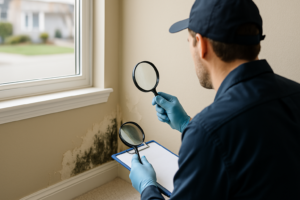
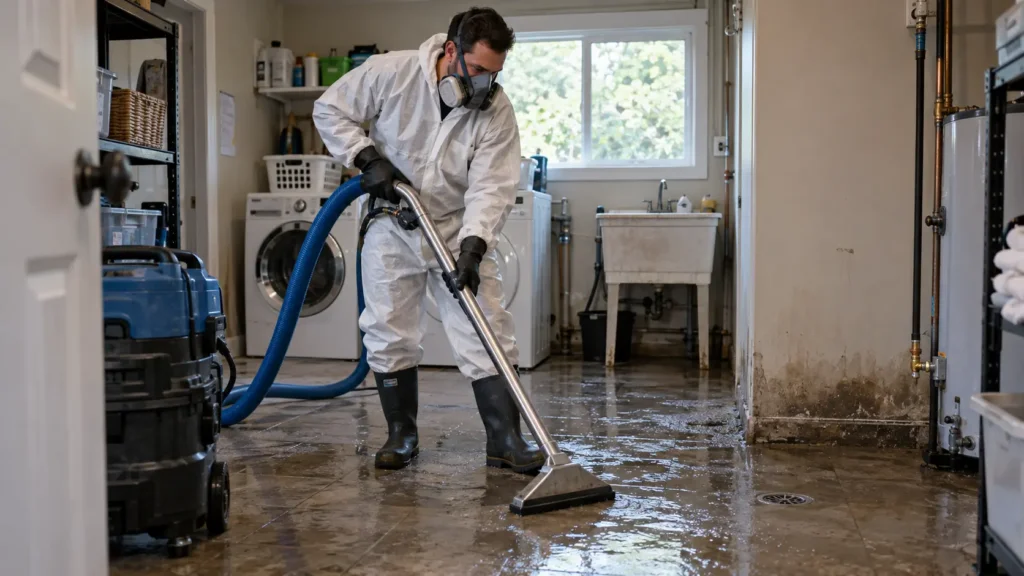
Most Auburn homeowners pay between $2,000 and $10,000 to clean up a sewage backup. The average job lands near $3,000 to $5,000. A contained bathroom overflow sits at the bottom of that range. A saturated basement can pass $15,000 once rebuilding starts. Two things decide where you land: how much porous material soaked, and how long the sewage sat before extraction began.
Key Takeaways
- Expect $7 to $15 per square foot for professional blackwater cleanup and sanitizing.
- Standard homeowners policies exclude sewer backups unless you added a backup endorsement.
- You own the side sewer to your property line, so that repair bill is usually yours.
What Sewage Cleanup Costs by Scope
The sewage cleanup cost Auburn WA homeowners face is priced by contaminated area, not by hours. Raw sewage is Category 3 water, often called blackwater. It carries bacteria and viruses. That means containment, protective gear and controlled disposal.
Typical ranges look like this:
- Small contained spill: $1,500 to $4,000. One bathroom, under 100 square feet. Extraction, sanitizing, minor drywall removal.
- Multi-room backup: $3,500 to $8,000. Spread across 100 to 400 square feet. Carpet and pad removal, structural drying.
- Major contamination: $7,000 to $15,000. Several rooms or a finished basement, with full drywall tear-out and odor treatment.
- Severe flooding with rebuild: $15,000 to $50,000 and up. Subfloors, framing and layout work all come back into scope.
What Actually Drives Your Number
How Long It Sat
Time is the single biggest cost multiplier. Sewage wicks into drywall and subfloor within hours. A backup found in the morning costs far less than one discovered after a weekend away. That timing gap explains most of the spread in sewage cleanup cost Auburn WA quotes.
How Much Porous Material Soaked
Hard surfaces clean up. Porous ones usually do not. The state health department is direct about this. Saturated wall-to-wall carpet and pad “usually cannot be adequately cleaned” and should be removed. The Washington State Department of Health recommends wrapping it in plastic and landfilling it. That guidance is why tear-out appears on your invoice.
Where the Water Travelled
Many homes here sit on crawl spaces. Sewage that reaches a crawl space means vapor barrier replacement and insulation removal. Both add cost that a surface-level quote will miss.
The Second Bill Most Homeowners Miss
Cleanup and plumbing are two separate invoices. Remediation crews restore the building. A plumber still has to fix what caused the backup.
Budget for that root cause separately.
- Sewer camera inspection: $100 to $500
- Standard line snaking: $200 to $500
- Hydro jetting for roots or grease: $600 to $1,400
- Trenchless pipe lining: $80 to $250 per linear foot
- Dig-and-replace: $50 to $180 per linear foot
A collapsed lateral line can run past $20,000 on its own. Premier Water Removal recommends a camera inspection before you approve any excavation quote.
Who Pays in Auburn: You or the City?
This question changes the total more than any other, and most cost guides skip it.
The City maintains the public sewer mains. You maintain the pipe running from your house to your property line. City of Auburn Public Works states that property owners are responsible for the operation, maintenance and repair of their side sewers. A blockage in that stretch is your cost.
Report the problem anyway. The City asks residents to call Maintenance and Operations at 253-931-3048. Crews will confirm whether the public main is clear. If the blockage sits in the City main, responsibility shifts. That one call can be worth thousands, so make it before authorizing any digging. Side sewer repairs also require a City permit.
Will Insurance Cover It?
Usually not by default. Standard policies exclude water and sewage backing up from municipal lines, drains and sump pumps. Sudden internal failures like a burst supply pipe are covered. A backup from the sewer is treated differently.
Coverage comes from a Water Backup and Sump Discharge endorsement. It typically adds $50 to $150 a year. It provides $5,000 to $25,000 of protection. It must be on the policy before the loss happens. Check your declarations page now rather than during an emergency.
How to Avoid the Next One
Most backups here are preventable. Have the main line cleaned every 18 to 24 months. Move to every 6 to 12 months if you have older cast iron or clay pipe, or mature trees over the line. Established neighborhoods in the valley have plenty of both.
Never pour fats, oils or grease down a drain. The City names them as major contributors to blockages in side sewers and public mains. Watch for early warning signs too. Several drains backing up at once, gurgling toilets, slow drainage or yard odors all justify a plumber’s visit.
Frequently Asked Questions
How much does sewage backup cleanup cost on average?
Most residential jobs run $2,000 to $10,000, averaging $3,000 to $5,000. Per square foot, budget $7 to $15 depending on contamination and materials affected.
Does homeowners insurance cover a sewer backup?
Not under a standard policy. You need a water and sewer backup endorsement purchased before the incident, typically $50 to $150 per year.
Can I clean up sewage myself?
Small hard-surface spills can be handled with gloves, eye protection and a bleach solution. Anything reaching carpet, drywall or a crawl space needs professional extraction and sanitizing.
How often should sewer lines be cleaned?
Every 18 to 24 months for modern pipe with no clog history. Every 6 to 12 months for clay or cast iron lines with mature trees overhead.
Why does the crew throw away carpet that looks fine?
Sewage saturates the pad and backing where bacteria survive cleaning. State health guidance treats saturated wall-to-wall carpet as unsalvageable, so removal is standard.
How long does sewage cleanup take?
Extraction and sanitizing usually take one to two days. Structural drying typically runs three to five days. Rebuild work follows once moisture readings clear.
Sewage in the House? Don’t Wait It Out
Every hour raw sewage sits, it moves further into materials you would rather keep. The gap between a contained bathroom job and a gutted basement is measured in hours. Getting an accurate scope early is what keeps this from becoming the expensive version.
Premier Water Removal handles containment, extraction and sanitizing with our water damage restoration crew in Auburn on call around the clock. Our sewage cleanup team also documents every affected material for your insurer. Call (253) 400-5633 and keep everyone out of the area until a technician arrives.