Structural Drying After Water Damage: Why Surface-Dry Is Not Dry
You mopped up the water and ran a box fan all night. The floor feels dry to the touch, so the problem seems solved. Then a musty smell appears two weeks later. Surface-dry is not the same as structurally dry. That difference decides whether mold moves in.
Key Takeaways
- ›Structural drying removes hidden moisture from framing, subfloors, and wall cavities.
- ›Surface drying leaves trapped water that feeds mold and rots wood over time.
- ›Certified crews use meters, dehumidifiers, and air movers to dry your home fully.
What Is Structural Drying?
Structural drying is the process of removing trapped moisture from the building itself. That means the studs, subfloor, drywall, and insulation, not just the visible surfaces. Water wicks into these materials and hides where towels and fans cannot reach.
The Institute of Inspection, Cleaning and Restoration Certification sets the standard for this work. Its Applied Structural Drying program trains technicians to dry a home the right way.
Why Surface-Dry Fools Auburn Homeowners
A floor can feel dry while the subfloor below stays saturated. Drywall can look fine while moisture climbs inside the wall cavity. In Auburn’s damp climate, that hidden water evaporates slowly and lingers for weeks.
This is the trap. The home looks recovered, so the homeowner stops drying too soon. The moisture stays, and the damage continues out of sight.
The Science of Drying a Structure
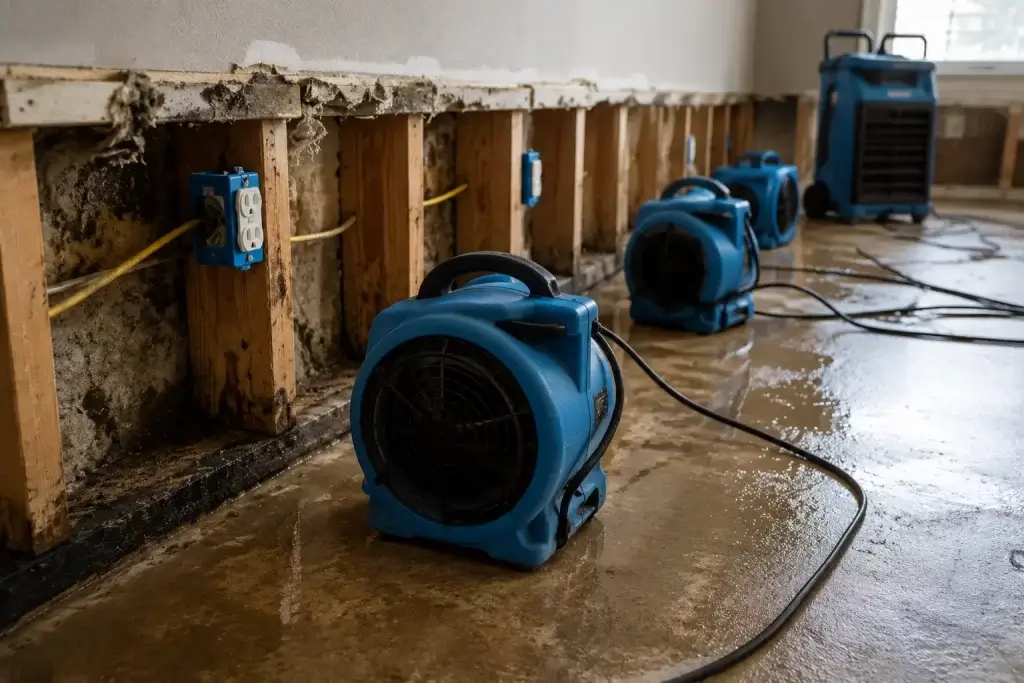
Proper drying balances four factors: temperature, airflow, humidity, and time. Crews adjust each one to pull water out of materials and into the air. Then dehumidifiers remove that moisture from the room entirely.
Moisture Mapping and Meters
Technicians use moisture meters to find water you cannot see. They map the wet zones and set a target dry standard for each material. Readings guide where equipment goes and when drying is truly done.
Air Movers and Dehumidifiers
Air movers push air across wet surfaces to speed evaporation. Dehumidifiers then capture the released moisture before it resettles. The two work together, and removing either one stalls the process.
Daily Monitoring
Drying is not a set-and-forget job. Crews return daily to check readings and reposition equipment. They confirm the structure hits its dry goal before they pull the gear.
What Happens If You Skip Structural Drying?
Trapped moisture is the leading cause of mold after a water loss. The EPA warns that mold can begin growing within 24 to 48 hours of wet conditions. Its guide to mold and moisture explains the risk.
Beyond mold, lingering water rots framing and warps flooring. Wood swells, fasteners loosen, and finishes peel. What started as a small leak can become a structural repair.
How Long Does Structural Drying Take?
Most homes dry in three to five days with professional equipment. Severe saturation or dense materials can take longer. The crew sets the timeline from moisture readings, not from guesswork.
Premier Water Removal monitors each Auburn job daily until the structure meets its dry standard. We document every reading for your records and your insurer. That proof protects you if hidden damage surfaces later.
Our structural drying in Auburn service uses calibrated meters and commercial-grade equipment on every loss. We dry the home you cannot see, not just the floor you can.
How Drying Works on Wet Drywall
Drywall is one of the trickiest materials to dry. It soaks up water like a sponge and holds it. How a crew handles it decides whether it stays or goes.
When Drywall Can Be Saved
Lightly wet drywall can often dry in place with airflow. Crews drill small holes near the base to vent the wall cavity. Moisture meters confirm the cavity behind it is truly dry.
When It Has to Come Out
Drywall touched by contaminated water usually has to be removed. Material that crumbles or stays wet also gets cut out. Replacing a section beats trapping moisture behind a wall.
The Phases of a Professional Dry-Out
A proper dry-out follows a clear sequence. Each phase sets up the next for a complete result. Skipping a step leaves moisture behind.
Inspect, Extract, and Remove
Crews first document the damage and find every wet zone. They extract standing water before anything else. Unsalvageable, waterlogged materials come out next.
Dry, Monitor, and Verify
Then air movers and dehumidifiers go to work on the structure. Crews monitor the readings daily and adjust the setup. They verify the dry standard before the equipment leaves.
What Does Structural Drying Cost?
Cost depends on a few clear factors. The size of the wet area drives most of it. The water type and materials affect the rest.
What Drives the Price
A larger saturated area needs more equipment and more days. Clean water costs less to handle than contaminated water. Dense materials like hardwood take longer and add to the bill.
Why Insurance Matters Here
A sudden, covered water loss usually includes the drying cost. Daily moisture logs support your claim. A fast Water Damage Restoration Near Me call limits the total damage.
Frequently Asked Questions
Don’t Stop Drying Too Soon
The most expensive water damage is the kind you cannot see. A floor that feels dry can still hide weeks of slow rot underneath. When water hits your Auburn home, let the Premier Water Removal crew confirm it is dry with real readings, not guesswork.