Water doesn’t wait for a convenient moment. A burst pipe at 2 a.m., a washing machine supply line that lets go while everyone’s at work, a roof leak that turns a bedroom ceiling into a sponge — these situations land on landlords and tenants without warning, and the first hour matters more than most people realize. If you’re facing water damage in a home you rent or rent out, call Premier Water Removal at (253) 400-5633 for 24/7 emergency response.
This guide covers leased single-family homes and apartments. If you’re dealing with a condominium or HOA situation, that’s a different set of responsibilities covered separately. Here, the focus is on what landlords and tenants each need to do right away — and how to get water damage under control before it turns into a mold problem.
Landlord and Tenant Water Damage
Roles matter when water is spreading across the floor. Confusion about who is responsible for calling whom — and who has authority to let a restoration crew in — costs critical drying time. Clear communication between the two parties is the single most important factor in limiting damage.
Emergency Water Removal Starts With Stopping the Source
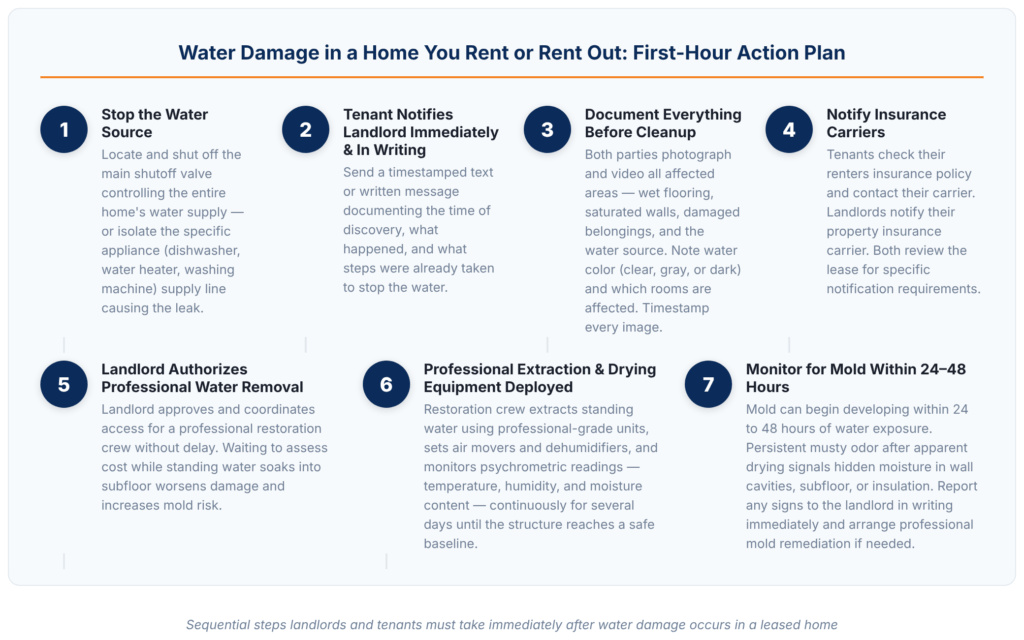
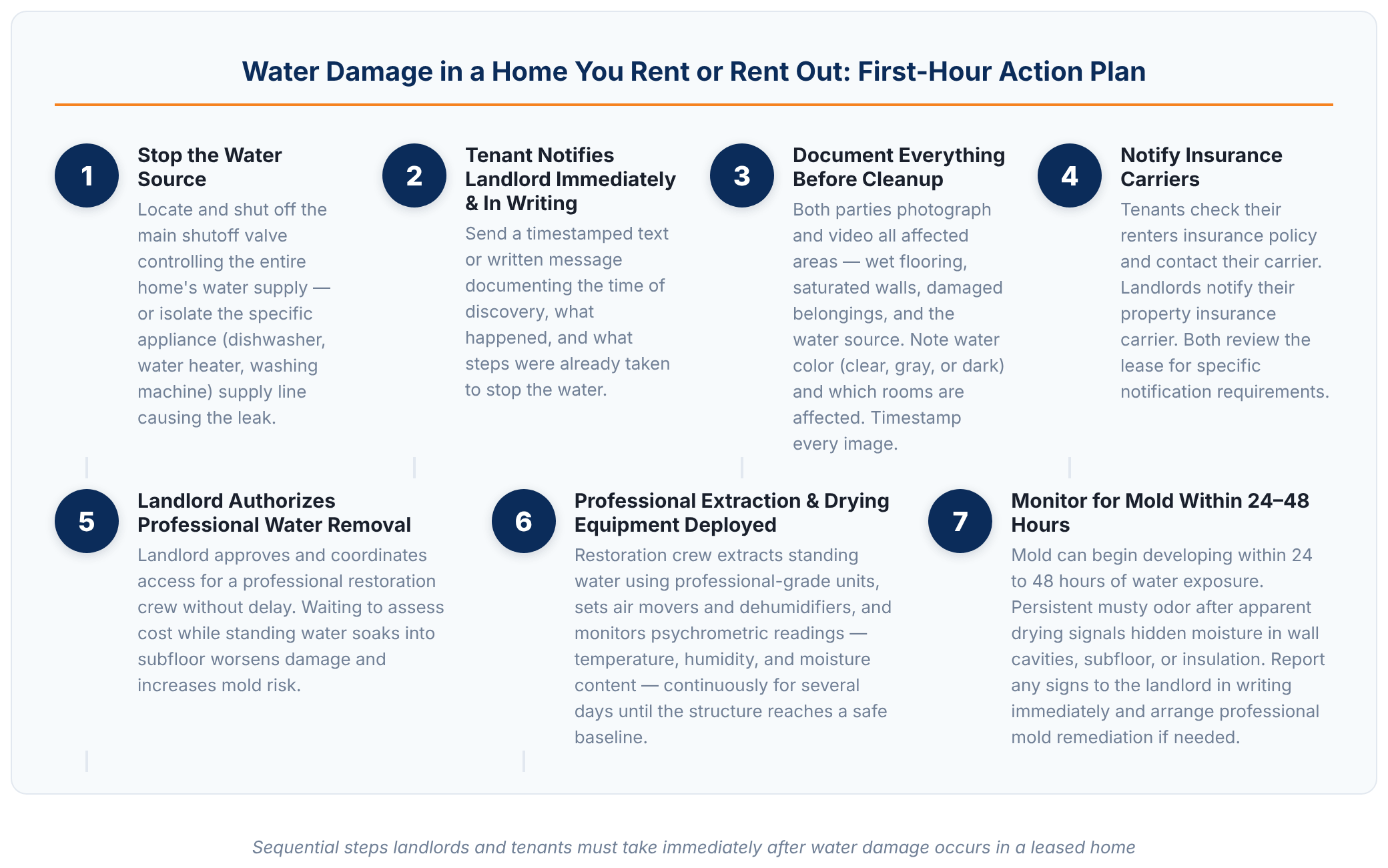
Before anyone calls anyone, stop the water. The main shutoff valve for the property controls the water supply to the entire home. Tenants should know where it is before an emergency happens; landlords should make sure it’s accessible and clearly identified. If a specific appliance is the source — a dishwasher, a water heater, a washing machine — shut off that supply line first.
Once the source is stopped, the tenant’s job is to notify the landlord immediately and in writing. A text message with a timestamp works. Document the time, describe what happened, and note what steps were taken. Landlords should respond promptly and authorize emergency water removal without delay. Waiting to assess cost or argue responsibility while standing water soaks into subfloor is the wrong call every time.
Document Everything Before Cleanup Begins
Both parties benefit from thorough documentation. Walk through the affected areas and photograph or video everything — wet flooring, saturated walls, damaged belongings, the source of the water if it’s visible. Capture timestamps on every image. Note which rooms are affected, whether any personal property was damaged, and what the water looks like (clear, gray, or dark).
Thorough photo and video documentation before cleanup begins protects both the landlord’s insurance claim and the tenant’s personal property claim. Do it before anything is moved or dried.
Tenants should check their renters insurance policy. Landlords should notify their property insurance carrier. Both should review their lease for any specific notification requirements. This article provides general information only — check your lease and insurer for guidance specific to your situation.
Getting Emergency Water Removal Started
Emergency water removal is the process of extracting standing water, setting drying equipment, and monitoring moisture levels until the structure returns to a safe baseline. This is not a job for fans from the garage. Water migrates into wall cavities, under flooring, and into insulation in ways that aren’t visible from the surface.
Premier Water Removal has served the greater Seattle and Puget Sound area since 1998, responding 24/7 to exactly these situations. Its IICRC-certified technicians bring professional-grade extraction units, air movers, and dehumidifiers on-site and track progress with moisture readings throughout the drying process. Premier is also a preferred vendor for insurers.
Surface dry is not the same as structurally dry. Hidden moisture in walls and subfloor is where mold begins, which is why moisture readings matter before anything is closed up.
For landlords, authorizing professional water removal quickly is both a property-protection decision and a tenant-safety decision. For tenants, understanding that the landlord needs to approve and coordinate access for the crew helps move things forward without conflict. Schedule your free consultation by calling (253) 400-5633 or emailing office@premierwaterremoval.com.
Keeping Occupants Safe While Drying Is Underway
Wet structures carry real risks. Slip hazards, electrical concerns near standing water, and compromised air quality are all legitimate reasons to limit time in affected areas. If the damage is extensive, the lease and local housing standards may address whether the home remains habitable — that’s a conversation between the landlord, the tenant, and their respective insurers.
During active drying, the restoration crew will run equipment continuously. Drying typically takes several days depending on the materials affected and how long water was present before extraction began. The crew monitors psychrometric readings — temperature, humidity, and moisture content in materials — to confirm drying is progressing correctly.
Mold and Odor Follow-Up After Water Damage
Mold can begin developing within 24 to 48 hours of water exposure in the right conditions. The Pacific Northwest’s humidity makes this risk real year-round, and leased homes — especially older ones common throughout King, Pierce, and Thurston counties — often have less airflow in crawl spaces and basements where moisture lingers.
If water damage is not fully dried, or if drying was delayed, mold remediation may be needed as a follow-up step. A musty odor after water damage is a signal that moisture remains somewhere in the structure, not just a cosmetic issue. Odor that persists after surfaces appear dry usually points to hidden moisture in wall cavities, subfloor, or insulation.
Landlords are responsible for maintaining a habitable property, which includes addressing mold that results from structural issues. Tenants should report any signs of mold or persistent odor to the landlord in writing as soon as they appear. Both parties benefit from professional mold remediation rather than surface-level treatments that mask the problem without resolving it.
What Professional Mold Remediation Covers
Mold remediation in a leased home typically includes containment of the affected area, removal of compromised materials, treatment of surfaces, and verification that the area is clear before reconstruction. Premier’s team handles mold remediation as a connected service to water damage restoration — the same crew that dries the structure can assess and address mold if it develops.
Frequently Asked Questions
Who is responsible for calling a water damage restoration company — the landlord or the tenant?
The landlord typically authorizes and coordinates professional restoration, since they own the property and carry the property insurance. Tenants should notify the landlord immediately and in writing, then follow the landlord’s direction on access and next steps.
Can a tenant let a restoration crew into the home without the landlord’s permission?
In most cases, the landlord needs to authorize access for a restoration crew. In a genuine emergency where the landlord cannot be reached quickly, tenants should document all attempts to contact the landlord and keep records of any decisions made to protect the property.
Does renters insurance cover water damage to a tenant’s belongings?
Renters insurance often covers personal property damaged by a sudden water event, but coverage varies by policy and cause. Tenants should contact their insurance carrier directly and review their specific policy terms. This article does not provide legal or insurance advice.
How long does it take to dry out a water-damaged room in a leased home?
Drying time depends on the materials affected, the volume of water, and how quickly extraction began. Most residential drying projects take several days of continuous equipment operation. A restoration crew monitors moisture readings throughout to confirm the structure is drying correctly.
When does water damage become a mold problem in a leased home?
Mold can begin developing within 24 to 48 hours of water exposure when conditions are right. Any water damage that wasn’t extracted and dried promptly carries mold risk. Persistent musty odor after apparent drying is a sign that hidden moisture remains and professional assessment is warranted.
Premier Water Removal is available 24/7 for homeowners and property owners across Auburn, Seattle, Bellevue, Tacoma, and the broader Puget Sound region.