It’s 2 a.m. You’ve just found standing water in your living room. Your first instinct might be to grab towels — but the most important thing you can do right now is pick up the phone. Knowing what happens after that call can make the difference between a manageable cleanup and months of structural repairs.
What Happens When You Call Water Damage Restoration
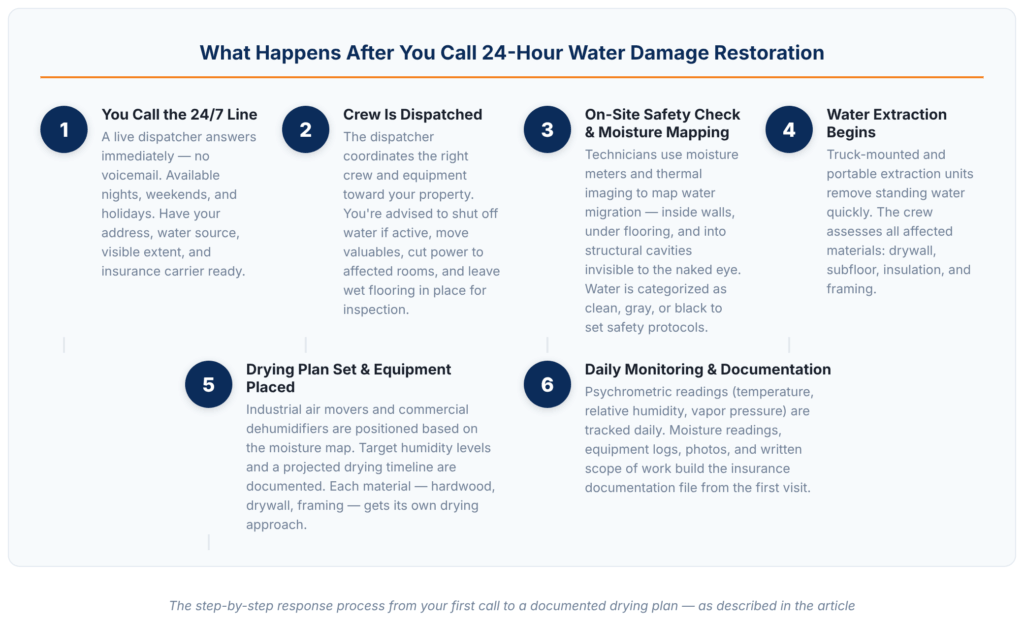
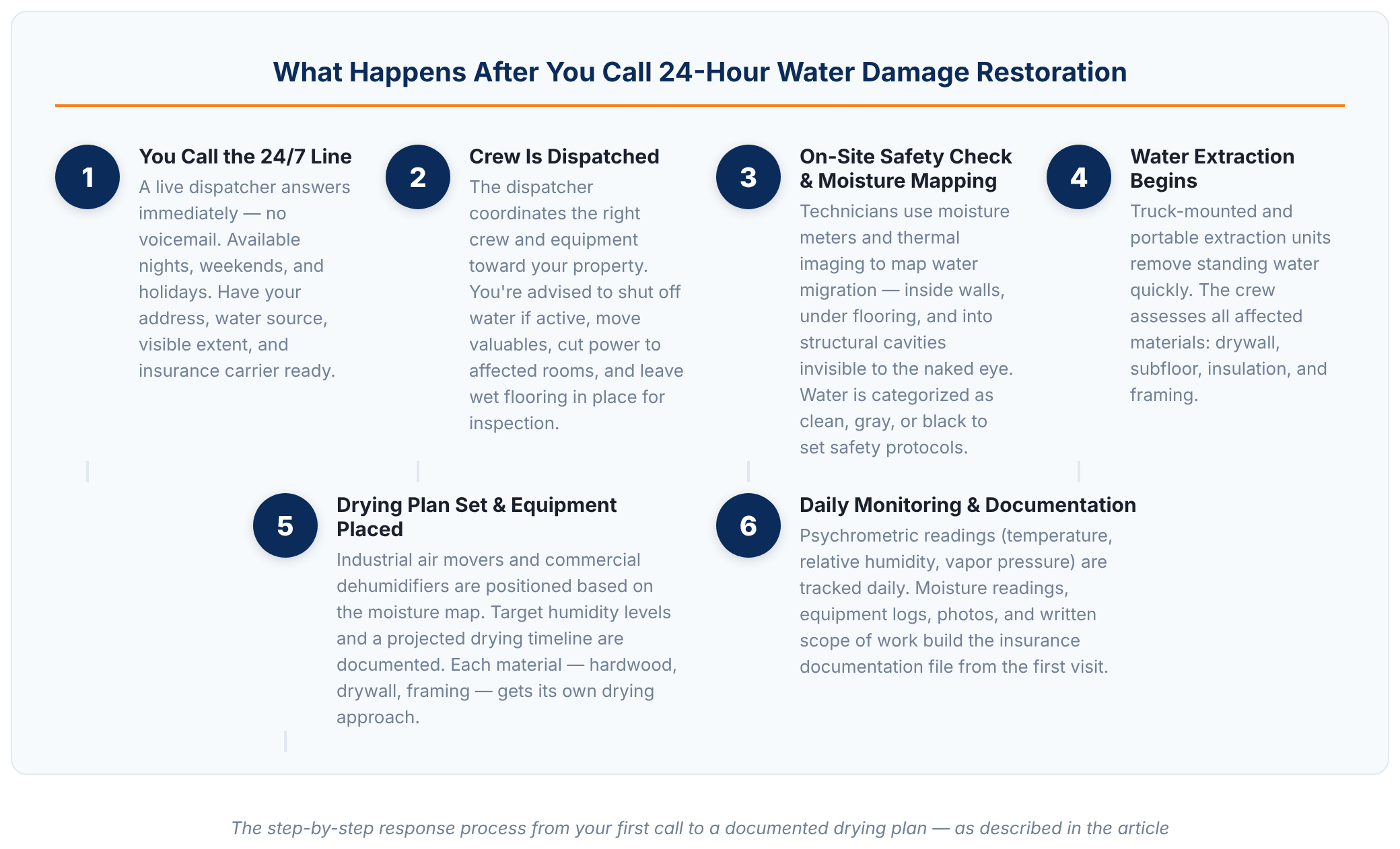
When you call a 24-hour water damage restoration line, you’re not leaving a voicemail. You’re connected directly to a live dispatcher who begins coordinating your response immediately. At Premier Water Removal, that line is staffed around the clock — nights, weekends, and holidays included.
The dispatcher’s job is to get the right crew and equipment to your door as fast as possible. To help them, have this information ready:
- Your address — including any gate codes or access notes
- Source of the water — appliance leak, roof, toilet overflow, or unknown
- How much is visible — a puddle, a soaked room, or multiple floors affected
- Whether the water source is still active — if it is, shut off your main water supply if you can safely do so
- Your insurance carrier — having this ready helps the crew begin documentation from the start
Don’t worry if you can’t answer every question. The dispatcher works with what you have. Their goal is to get a trained crew moving toward your property.
What to Do While You Wait
- Turn off electricity to affected rooms if you can do so without entering standing water
- Move valuables, documents, and electronics to a dry area
- Do not use a household vacuum on standing water — it’s a safety and equipment hazard
- Leave wet carpet and flooring in place; the crew needs to assess it before any removal
- Take photos of visible damage for your own records
“The crew needs to see the damage as it is. Disturbing the scene before inspection can complicate both the restoration plan and your insurance claim.”
On-Site Arrival: Inspection and Moisture Mapping
Arrival triggers a structured assessment — not a guess. The crew’s first priority is safety, followed immediately by a full moisture inspection using professional-grade equipment.
How the Crew Assesses Your Property
Technicians use moisture meters and thermal imaging to map exactly where water has traveled — including inside walls, under flooring, and into structural cavities that look dry to the naked eye. This psychrometric assessment documents current conditions and guides every decision that follows.
The inspection covers:
- Water category (clean, gray, or black water) — this determines safety protocols and required containment
- Affected materials — drywall, subfloor, insulation, framing
- Moisture readings at multiple points to establish a drying baseline
- Scope of affected area, including adjacent rooms that may show hidden migration
Moisture mapping is not optional. Water routinely travels far beyond the visible wet zone, and restoration plans built without it often miss affected areas — leading to mold growth weeks later.
Water Extraction and the Drying Plan
Once the assessment is complete, extraction begins. Truck-mounted and portable extraction units remove standing water quickly. Then the crew sets the drying plan — a documented, science-based approach that specifies equipment placement, target humidity levels, and a projected drying timeline.
Structural Drying and Dehumidification
Industrial air movers and commercial dehumidifiers are positioned based on the moisture map — not guesswork. The crew monitors psychrometric readings (temperature, relative humidity, and vapor pressure) throughout the drying process, adjusting equipment as conditions change. Daily monitoring visits verify progress against the drying baseline established at inspection.
Materials like hardwood floors, wall cavities, and structural framing require specific drying approaches. Hardwood dries at a different rate than drywall. The crew sets a drying plan for each material based on its moisture readings.
Ready to get started? Get a quote today or call (253) 400-5633 — Premier Water Removal responds 24/7.
Documentation for Your Insurance Claim
Every step of the restoration is documented: moisture readings, equipment logs, photos, and written scope of work. That file starts building the moment the crew arrives on site.
Good documentation protects you. It establishes the pre-remediation condition of your property, justifies the scope of work to the adjuster, and creates a clear record if any dispute arises. Premier Water Removal is a preferred vendor for insurers, and its IICRC-certified crew is experienced in producing the detailed records adjusters need.
Serving Auburn, Seattle, Bellevue, and the greater Puget Sound region since 1998, Premier Water Removal‘s team has handled this process for homeowners across King, Pierce, and surrounding counties. When water damage hits at any hour, the process is the same — thorough, documented, and built around getting your property dry.
Schedule your free consultation by calling (253) 400-5633 or emailing office@premierwaterremoval.com. Your peace of mind is one call away.
Frequently Asked Questions About 24-Hour Water Damage Restoration
Do I need to be home when the crew arrives?
Yes, someone should be present to provide access and answer questions about the source of damage. If you’re away, make arrangements for a trusted person to let the crew in so assessment and extraction can begin without delay.
Will my homeowner’s insurance cover after-hours emergency water removal?
Most standard homeowner’s policies cover sudden and accidental water damage. Coverage depends on your specific policy and the cause of loss. Having your insurance carrier information ready when you call helps the crew begin documentation from the first visit.
How long does the drying process take after extraction?
Drying timelines vary based on materials affected, moisture levels, and airflow conditions. Your crew will establish a target timeline based on the initial moisture assessment and monitor progress daily.
What if I don’t know where the water came from?
Tell the dispatcher what you do know — what you see and where. The on-site crew uses moisture meters and thermal imaging to trace water migration and identify the source during the initial inspection, even when it isn’t immediately obvious.
Is it safe to stay in my home during water damage restoration?
It depends on the water category and affected areas. Clean water events in limited areas often allow occupants to stay. Sewage backups or large-scale flooding may require temporary relocation. The crew will advise you based on conditions found during the inspection.