
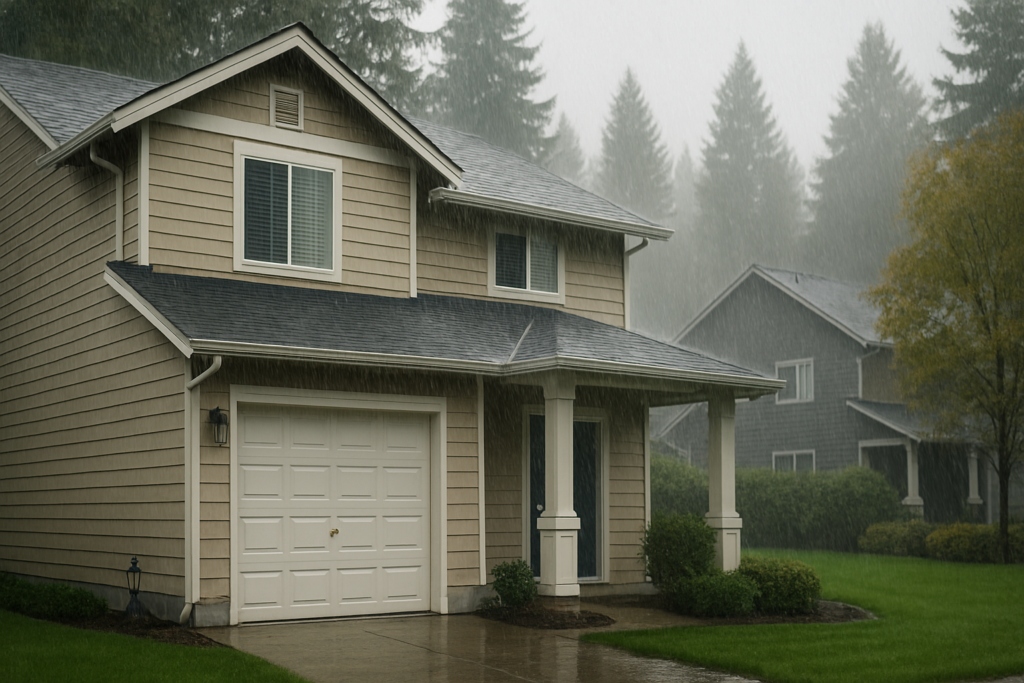
October through March is the stretch that decides how your house handles winter. The rain does not usually arrive as one dramatic event here. It arrives as weeks of saturation. A few systems then dump more water in two days than some regions see in a month. Most of the damage we see in Olympia traces back to something that could have been handled in September.
Key Takeaways
- ›Gutters, drainage and a tested sump pump do more for a Puget Sound home than anything you can buy mid-storm.
- ›Standard homeowner's insurance does not cover flooding, and flood policies take roughly 30 days to activate.
- ›Forecasters can flag a major system five to seven days out, so a prepared house has real warning.
Why the South Sound Gets Hit the Way It Does
South Sound weather is driven by systems that form far out over the Pacific. The mechanism has a name, and understanding it changes how you prepare.
Atmospheric Rivers, Explained Briefly
NOAA describes atmospheric rivers as narrow corridors in the sky that carry most of the water vapor outside the tropics. An average one moves roughly as much water as the mouth of the Mississippi. The strongest carry up to fifteen times that volume.
When one of those stalls over a watershed, the rainfall totals stop looking seasonal. A run of these systems in December 2010 produced between 11 and 25 inches of rain across parts of western Washington. That is the kind of event local drainage was never designed around.
Saturation Is the Real Problem
A single downpour on dry ground mostly runs off. The same rain on ground already soaked for six weeks has nowhere to go. It backs up at the foundation, finds the lowest entry point, and comes in.
That is why storm season water damage Olympia homeowners see often arrives with no dramatic storm attached. The ground simply stopped accepting water in November.
What to Do Before the Season Starts
This is the work that pays. None of it is expensive, and all of it is easier in dry weather.
Clear the Water Path Off the Roof
Gutters full of fir needles will overflow at the fascia and run down the wall. Check downspouts discharge well away from the foundation, not into a splash block that has shifted. Extensions are cheap and they solve a surprising share of basement intrusion.
Test the Sump Pump Before You Need It
Pour a bucket into the pit and confirm it cycles. A pump that has sat idle since spring is the one that fails in the first real event. Ready.gov specifically recommends a sump pump with battery backup. The storms that flood a basement are the same ones that cut the power.
Walk the Grade and the Drains
Look for soil that has settled toward the house rather than away from it. Clear yard drains and check valves while you can still see what you are doing. Move anything you would hate to lose off the basement floor and onto shelving.
The Insurance Gap Most Olympia Homeowners Miss
This one costs people real money every winter, and it cannot be fixed once the forecast turns.
FEMA is blunt about it. Homeowner's insurance policies do not cover flooding, and a flood policy typically takes up to 30 days to take effect. Buying in late October does not protect you for a November event.
Flooding is also the most common disaster in the United States, which makes the exclusion a bigger gap than most people assume. Worth knowing: water that comes in through a failed roof is usually treated differently from water that rises from the ground. The distinction decides which policy responds, so photograph the entry point.
When a System Is Actually Inbound
Forecasters can flag a significant atmospheric river five to seven days ahead. That is enough time to act rather than react.
Charge devices and locate flashlights before the wind arrives. Park away from the big firs if you can. Put important documents somewhere waterproof. Photograph each room while it is still dry, because that is the comparison an adjuster wants later.
The First 48 Hours After Water Gets In
Speed matters more than technique in the opening days.
Shut off power to any affected area before stepping into standing water. Get soaked soft goods out of the house rather than trying to dry them in place. Keep every receipt, and do not throw away damaged material until it has been photographed and logged.
If the roof is the entry point, a tarp is a stopgap rather than a repair. Premier Water Removal handles emergency roof tarping for exactly that window between the storm passing and the roofer arriving.
Frequently Asked Questions
Prep Now, Not at 2 A.M.
Nothing on this list takes a weekend. Gutters, a tested pump, a drainage walk and a flood-policy decision cover most of it. That is what actually goes wrong here between October and March.
If a system already got in, Premier Water Removal covers the South Sound. Our storm damage restoration crews handle extraction, structural drying and the documentation your insurer asks for. You can also see the full service area for Olympia. Call before the material starts breaking down, because storm season water damage Olympia properties take only gets harder to reverse.