
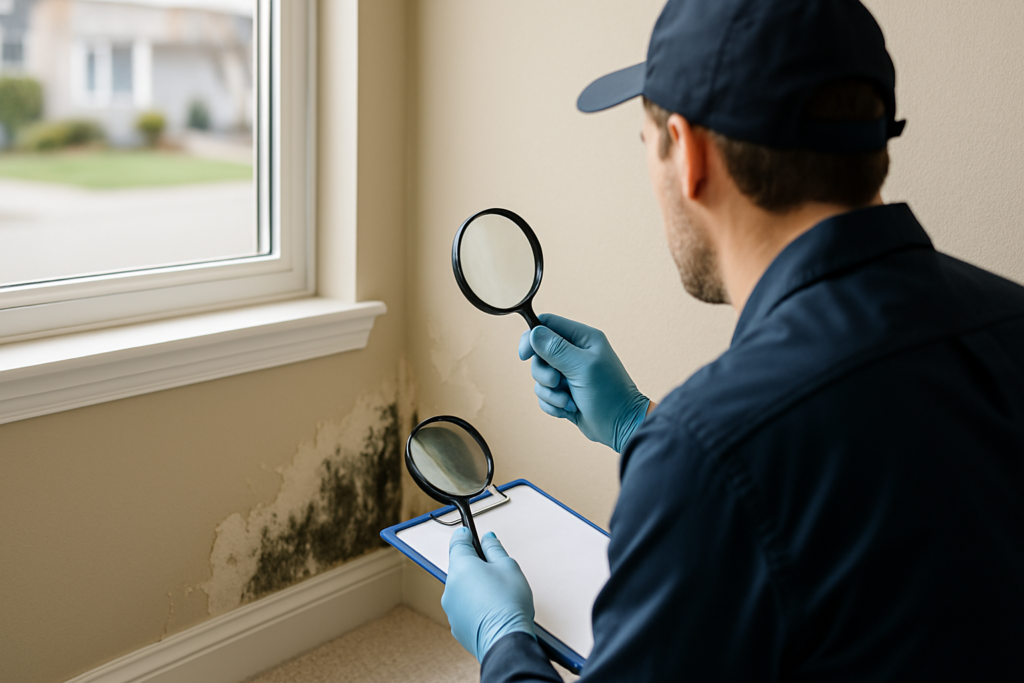
You smell it before you see it. That faintly earthy, wet-cardboard note in a hallway or closet that does not quite go away after cleaning. Nothing on the walls looks wrong. Nothing has leaked that you know of. That gap sits between what your nose reports and what your eyes confirm. It is where most hidden mold lives in this part of King County.
Key Takeaways
- ›A musty smell with no visible growth is the single most reliable signal, and health agencies treat it that way.
- ›Mold hides in a short, predictable list of places, most of which you can check without opening anything.
- ›Do not pull wallpaper or cut drywall to investigate, because disturbing growth releases spores into the room.
Why Covington Homes Hide It So Well
Western Washington gives mold almost everything it needs for most of the year. The wet season runs long, outdoor air stays near saturation, and houses get sealed up and heated from October onward.
That combination matters more than any single leak. Washington's Department of Health notes that mold grows where warm, moist air condenses on cooler surfaces. That includes the inside of cold exterior walls. No burst pipe is required. A heated room breathing against an under-insulated wall will do it.
Covington's housing stock makes this concrete. Much of it is late-century suburban construction on lots with mature evergreens and real grade changes. Shaded crawl spaces stay damp. North-facing walls stay cold. Both are patient.
The Checklist: Where It Actually Lives
The EPA publishes a specific list of concealed locations, and it is more useful than a list of symptoms. Work through these.
Behind and Underneath Surfaces
Check the underside of carpets and pads, especially in rooms over a crawl space. Look at the top side of ceiling tiles in any finished basement. The back of wallpaper and paneling is a classic location, and so is the back of drywall.
Around Anything That Carries Water
Mold gathers inside walls around pipes that leak or sweat. A cold supply line running through a warm wall cavity will condense for months. Look for staining low on the wall near a bathroom or kitchen run.
Behind Furniture on Outside Walls
This one surprises people. The wall surface behind a dresser, headboard or stacked closet shelving loses air circulation entirely. On a cold exterior wall in midwinter, that is where condensation sits.
Inside Ductwork and Above Ceilings
Mold can grow inside ducts and in roof materials above ceiling tiles, usually after a roof leak or where insulation is thin. If the musty smell gets stronger when the heat kicks on, the system is worth a look.
The Warning Signs Worth Acting On
Some signals justify a call. Others justify a closer look first. These are the hidden mold signs Covington WA homeowners should not wait on.
A Smell That Outlasts Cleaning
Washington's guidance is blunt: if you smell mold, it may be hidden behind wallpaper, in walls or ceilings, or under carpet. A smell that returns within a day of cleaning is reporting a source, not a surface.
Staining, Bubbling or Warping
Discolored patches on drywall, paint that bubbles or peels, and flooring that has cupped or gone soft all point at sustained moisture. None of them require visible growth to be meaningful.
Condensation That Never Clears
Beading on window sills through a wet winter month means the room's moisture has nowhere to go. Damp insulation or staining on attic roof decking is the same signal, one floor up.
Symptoms That Improve When You Leave
Allergy-type complaints that ease at work and return at home are worth taking seriously. They are not proof, but paired with a musty smell they change the odds considerably.
Do Not Go Looking With a Crowbar
This is the part most checklists leave out, and it matters more than the rest.
The EPA warns that investigating hidden mold can release a large volume of spores, and names removing wallpaper as a specific example. Pulling back paper with growth on the underside turns a contained problem into an airborne one.
Two further points from the same guidance. Bleach is not recommended as a routine step in mold cleanup. And painting or caulking over an affected surface does not work, because paint applied over mold is likely to peel.
So the checklist above is a looking exercise. Opening an assembly is where it stops being one. Premier Water Removal meters moisture instead, which finds the source without disturbing growth.
If You Rent in Washington
Tenants ask about this constantly, and the answer is more concrete than most people expect. Under Washington's landlord-tenant statute, a landlord must keep a unit fit for habitation and reasonably weathertight. The same statute requires landlords to give tenants health-department information on indoor mold hazards when the lease is signed. Put any complaint in writing and keep a copy.
Frequently Asked Questions
Smelled It but Can't Find It?
A smell you cannot trace is the most common reason people call Premier Water Removal. It is a reasonable reason. The checklist above will tell you whether to keep looking or stop opening things. Either way, the moisture source is the thing that has to change.
Premier Water Removal works Covington and the surrounding King County communities, and our mold removal crews find the moisture before the growth. If the smell is strongest over a crawl space, crawl space cleaning is often where it starts. Our Covington service area page lists everything we cover locally. The hidden mold signs Covington WA homeowners report most are the ones worth calling about early.