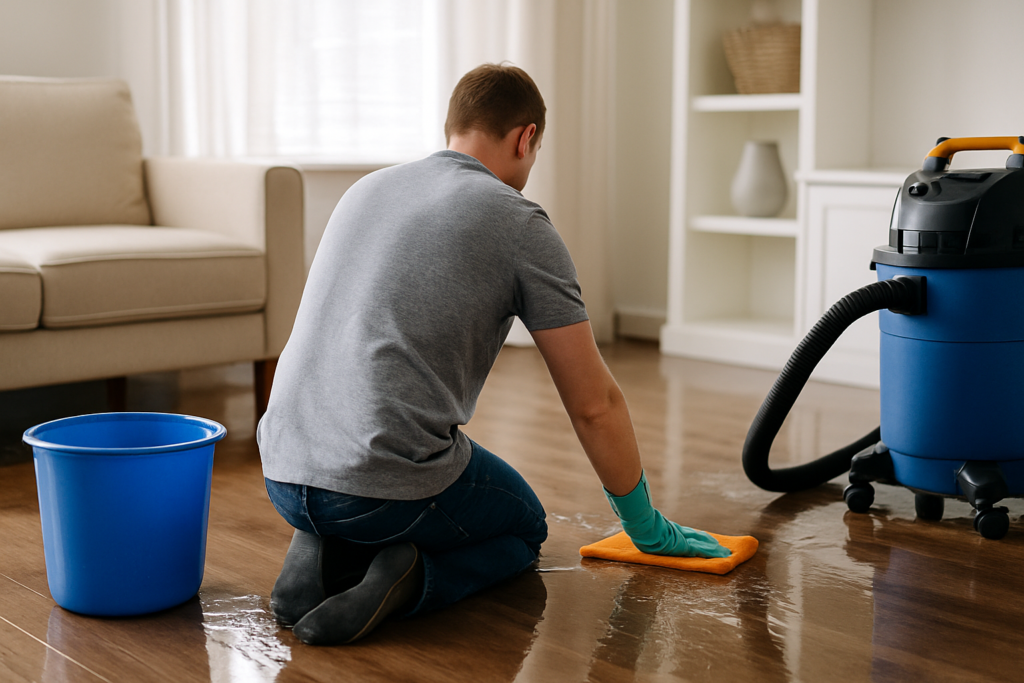
The shop vac comes out first. It almost always does. A supply line lets go under the kitchen sink and the floor goes dark. The instinct is to start sucking up water before it soaks in. That instinct is right. What goes wrong is everything over the next three days. By then the visible water is gone and the floor looks dry again.
Key Takeaways
- ›Surface dryness means nothing. Water moves into subfloor, framing and wall cavities, where a towel cannot reach it.
- ›Washington's health department gives soft materials 24 to 48 hours before replacement becomes the realistic call.
- ›The water's source decides the safe response. Clean supply water and sewage are not the same job.
Mistake 1: Waiting to See If It Dries on Its Own
This is the costliest habit on the list, and the local climate makes it worse. Drying depends on the air being drier than the material. Through a Puget Sound autumn, outdoor air is often already near saturation. Opening the windows in November moves damp air around a damp house.
A homeowner in Arizona can sometimes get away with waiting. In Snohomish the structure simply holds what it absorbed. The clock that matters is not how long the puddle takes to disappear.
What the 24-to-48-Hour Window Actually Means
Washington's Department of Health advises that soft materials be cleaned and dried within 24 to 48 hours. That covers carpets, bedding and upholstered furniture. Past that window, removal and replacement become the realistic call. It is not a suggestion to hurry. It is the practical limit before mold becomes the second, larger problem.
Mistake 2: Trusting "Dry to the Touch"
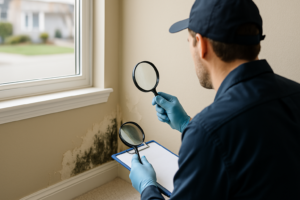
A hand on the floor tells you about the top millimetre of finish. It tells you nothing about the plywood underneath it. Water follows gravity and capillary action into the subfloor, then sideways into the bottom plate of the wall.
Carpet is the clearest example. The face fibres dry quickly because air moves across them. The pad underneath holds moisture for days, pressed flat against a cold slab or subfloor. Pulling back a corner and feeling the pad is a better test than walking on it barefoot.
Where the Water Hides in Older Snohomish Homes
Look low and look behind. Bottom plates, the back of baseboards and cabinet toe kicks all hold water. So does the cavity behind a dishwasher. All of them stay wet long after a floor reads dry. Crawl spaces are worse again, because nothing down there gets warm enough to drive moisture off.
Mistake 3: Fighting a Real Loss With a Shop Vac and Box Fans
Household equipment is built for spills, not for saturation. A shop vac lifts standing water. It does not pull moisture out of material, and a box fan only moves air that is already too humid to help.
Premier Water Removal dries by changing the air, not by stirring it. Dehumidification lowers the vapour pressure around wet material so moisture leaves it. That is the step a rented fan cannot do. It is also why a room can feel breezy for a week and still hold a saturated wall.
Mistake 4: Treating Every Kind of Water the Same
Where the water came from changes what is safe to keep. A burst supply line is clean water. A backed-up drain or a sewer line is contaminated, and that is a different job with different rules.
The US EPA is direct about the limits of cleaning here. It warns that porous materials such as carpet and ceiling tiles may have to be thrown away. Once mold fills their crevices, the growth cannot be fully removed. The same guidance advises against painting or caulking over an affected surface, since paint applied over mold is likely to peel.
Two practical rules follow. Do not run an HVAC system you suspect is contaminated, because it will move the problem through the house. And if the water carried sewage, treat removal as the default rather than cleaning.
Mistake 5: Cleaning First and Documenting Later
Insurers assess what they can see. A homeowner who spends a weekend tearing out carpet and bagging drywall often destroys the evidence of how bad it was.
Photograph everything before it moves. Capture the source, the standing water, the affected rooms, and serial numbers on any damaged appliance. Keep the receipts for anything you buy during the emergency. Write down the date and time you discovered it.
None of that slows the work down. It takes ten minutes. It is the difference between a documented claim and an argument. Premier Water Removal photographs and logs each affected area as part of the job.
Frequently Asked Questions
Before You Plug In Another Fan
Most of the damage that follows a leak is not caused by the leak. It is caused by the three days afterwards, when a floor looks dry and a wall cavity is not. Checking properly costs nothing. Guessing wrong costs a subfloor.
Premier Water Removal works the valley out of Auburn. You can see the full scope of our water damage restoration in Snohomish. Our crews bring metering and professional water extraction equipment. That tells you what is actually wet, rather than what merely feels dry. Knowing the real reading is what stops a small loss becoming a rebuild.