Ice Dam Roof Leak Water Damage Seattle: What Happens Inside Your Home
A thin sheet of ice along your roofline might look harmless — almost decorative. But behind that frozen ridge, water is pooling, and it has nowhere to go except through your shingles, into your attic, and down through your ceiling. By the time you notice a stain on the drywall, the damage inside has already been building for days. Call Premier Water Removal at (253) 400-5633 — our IICRC-certified team is available for emergency dispatch, day or night.
Ice dam roof leak water damage is one of the most underestimated winter threats facing Seattle-area homeowners. The Pacific Northwest’s wet, mild winters create a specific set of conditions that make ice dams more likely than most people realize — and the interior water damage they cause can be extensive if not addressed quickly.
Ice dams don’t just damage your roof. They force water into your attic, insulation, walls, and ceilings — creating structural moisture problems and mold risk that require professional drying and remediation, not just a roofing patch.
How Ice Dams Form on Seattle Roofs During Winter Storms
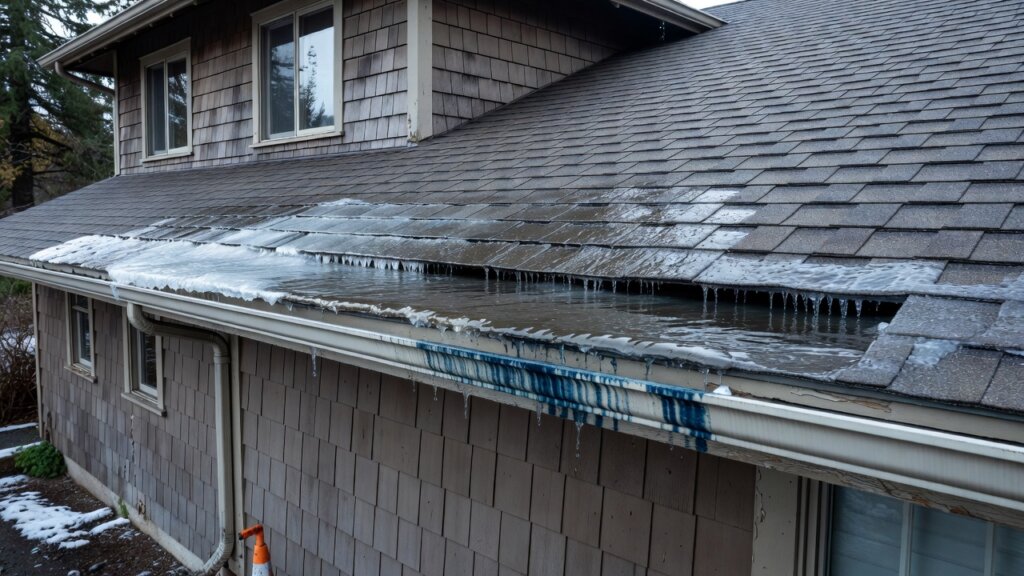
Ice dams form when heat escaping from your living space warms the upper portion of your roof, melting accumulated snow. That meltwater runs down toward the eaves, where the roof surface is colder — often at or below freezing — and refreezes into a ridge of ice. As more snow melts above, water backs up behind that ridge and sits against your shingles, flashing, and underlayment.
Why Puget Sound Winters Create Ideal Ice Dam Conditions
Seattle and the surrounding Puget Sound region doesn’t get the sustained deep freezes of the Midwest, but it gets something more problematic for ice dams: freeze-thaw cycling. Temperatures regularly hover just above and below freezing during winter cold snaps, which means rooftop snow melts during the day and refreezes at night — repeatedly. Each cycle adds to the ice ridge and extends the window during which standing water is pressing against your roof system.
Older homes in Auburn, Bellevue, and Seattle are particularly vulnerable. Many were built before modern attic insulation and ventilation standards, which means heat loss through the roof deck is higher, meltwater forms faster, and the ice dam grows more aggressively.
Common Roof Features That Make Ice Dams Worse
- Low-slope or flat roof sections — Water moves slowly and has more time to refreeze
- Inadequate attic insulation — More heat escapes, more snow melts unevenly
- Poor attic ventilation — Warm air accumulates against the roof deck
- Complex rooflines with valleys — Ice collects at transitions and intersections
- Skylights and dormers — Create warm spots that accelerate uneven melting
Signs of Ice Dam Roof Leak Water Damage Inside Your Seattle Home
The most important thing to understand about ice dam damage is that the visible signs inside your home lag behind the actual water intrusion. Water may travel along rafters, insulation batts, and wall cavities for days before it appears on your ceiling or drips through a light fixture.
Interior Warning Signs You Should Not Ignore
- Water stains or wet spots on ceilings — Especially near exterior walls or in upper-floor rooms
- Bubbling or peeling paint on walls or ceilings — A sign of moisture saturating the substrate
- Damp or compressed attic insulation — Wet insulation loses R-value and becomes a mold substrate
- Dripping around window frames or skylights — Water tracking down from above along framing
- Musty odor in upper-floor rooms or the attic — Mold can begin colonizing wet materials within 24 to 48 hours
- Sagging or buckled drywall — Indicates prolonged saturation, not just a surface wet spot
“By the time a water stain appears on your ceiling, the insulation above it has often been saturated for days. That’s the window where mold risk becomes real.”
What’s Happening in Your Attic While You Wait
Most homeowners don’t check their attic after a winter storm. That’s exactly where ice dam damage does its worst work. Water entering through the roof deck soaks into insulation, saturates wood sheathing, and can run down rafters to the top plates of exterior walls. Attic moisture at this level creates conditions for wood rot and mold growth that may not become visible for weeks or months — long after the ice dam itself has melted.
Wet attic insulation is a particular problem. Fiberglass batts and blown-in cellulose both lose their insulating capacity when wet, and cellulose can retain moisture for extended periods, keeping the wood it contacts damp enough for mold to grow even after outdoor temperatures rise.
The Secondary Damage Chain: From Roof to Walls to Mold
Ice dam water damage rarely stays contained to one area. Once water breaches the roof assembly, it follows the path of least resistance — and in a typical Seattle-area home, that path runs through multiple building systems before it stops.
How Water Travels Through Your Home’s Structure
Water entering at the roof deck can move in several directions simultaneously. It soaks into attic insulation directly below the breach. It runs along rafters toward the exterior walls. It wicks into drywall from above. In homes with recessed lighting or ceiling fixtures, it pools at those penetrations and drips through — often the first visible sign a homeowner notices.
From the ceiling, water can continue into wall cavities, saturating wall insulation and the interior face of exterior sheathing. At that point, you’re dealing with moisture in multiple building assemblies, not just a wet ceiling.
Mold Risk After Ice Dam Water Intrusion
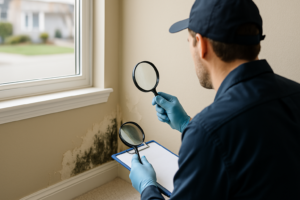
Mold growth is the secondary damage that turns an ice dam event from a repair job into a remediation project. Mold spores are present in every home environment. They need three things to colonize: a food source (wood, drywall, insulation), moisture, and time. An ice dam leak provides all three.
According to EPA guidance on mold in buildings, mold can begin to grow on wet materials within 24 to 48 hours of water intrusion — making rapid professional drying critical after any roof leak event.
Attic spaces are particularly susceptible because they’re typically unheated, poorly lit, and rarely inspected. Mold can establish on roof sheathing and rafters without any visible sign from inside the living space. By the time musty odors reach the rooms below, the colony may already be significant.
This is why professional moisture assessment after an ice dam event matters. Surface drying is not enough if moisture has reached structural framing or wall cavities. As an IICRC-certified restoration company, Premier Water Removal follows IICRC S500 drying standards to confirm that all affected assemblies reach safe moisture levels before equipment is removed.
Ice dam water intrusion creates conditions for mold growth in attic spaces and wall cavities — areas that don’t dry out on their own and that homeowners rarely inspect. Professional drying equipment and moisture mapping are required to confirm the structure is fully dry.
Ice Dam Removal and Roof Leak Repair Near Seattle: What Comes First
When an active ice dam is causing a leak, the immediate priority is stopping the water entry — but that’s only the first step. Removing the ice dam (typically done by a roofing contractor using steam or careful manual methods) stops new water from entering. What it doesn’t do is dry out the water that’s already inside your building assembly.
The Roof Repair and Water Damage Response Are Two Separate Jobs
This distinction matters. A roofing contractor can patch the exterior breach and remove the ice. A water damage restoration company handles what happens to the structure after water has entered. These are different scopes of work, and doing only one of them leaves the job incomplete.
| Task | Who Handles It | What It Addresses |
|---|---|---|
| Ice dam removal | Roofing contractor | Stops new water from entering |
| Roof leak repair / tarping | Roofing contractor | Seals the exterior breach |
| Water extraction | Water damage restoration company | Removes standing or pooled water |
| Structural drying | Water damage restoration company | Dries framing, insulation, drywall |
| Moisture mapping | Water damage restoration company | Confirms all affected areas are located |
| Mold remediation | Water damage restoration company | Addresses any mold growth in affected materials |
Emergency Roof Tarping After a Storm Leak
When a storm causes immediate roof damage — whether from ice dam pressure, wind, or falling debris — emergency tarping protects the structure from continued water intrusion while permanent repairs are arranged. This is a time-sensitive step. Every hour an open roof breach goes uncovered during a Pacific Northwest winter storm adds more water to an already saturated building assembly.
Does Homeowners Insurance Cover Ice Dam Water Damage in Seattle?
Standard homeowners insurance policies typically cover sudden and accidental water damage — including water that enters through a roof breach caused by an ice dam — as long as the damage is not the result of long-term neglect or deferred maintenance. The coverage question is one Seattle property owners ask frequently after a winter event.
Homeowners Insurance and Ice Dam Claims
Interior damage to ceilings, walls, insulation, and personal property is generally covered. The ice dam removal itself and the roof repair may or may not be covered depending on the specific policy language.
Does Renters Insurance Cover Water Damage?
Renters insurance covers a tenant’s personal property damaged by water intrusion, but it does not cover the building structure — that falls to the landlord’s property insurance. If you’re a renter in Seattle or Auburn and an ice dam leak damages your belongings, your renters policy is the right call. If you’re a landlord, your property policy governs the structural claim.
Working With Your Insurance Carrier After an Ice Dam Event
Documentation is everything in an ice dam insurance claim. Photograph the ice dam on the roof before removal. Document all visible interior damage — stains, wet materials, damaged contents — before any cleanup begins. A professional restoration company with direct insurance billing experience can help you document the damage scope accurately and work with your adjuster throughout the process.
Premier Emergency Water Removal works directly with major insurance carriers and provides full claims assistance, which means the documentation, communication, and billing process is handled on your behalf — not left to you to manage while also dealing with a damaged home.
Common Causes of Roof Leaks in Seattle Beyond Ice Dams
Ice dams are one specific winter hazard, but Seattle roofs face a range of conditions that can cause or accelerate leaks. Understanding the broader picture helps homeowners recognize when a roof issue may be contributing to interior moisture problems year-round.
Year-Round Roof Leak Risk Factors in the Pacific Northwest
- Failed or aging flashing — Flashing around chimneys, skylights, and valleys deteriorates over time and is a leading source of slow leaks
- Moss and algae growth — Seattle’s wet climate promotes heavy moss growth that lifts shingles and traps moisture against the roof deck
- Wind-driven rain — Atmospheric river events push water horizontally under shingles and through any gap in the roof assembly
- Clogged gutters — Backed-up gutters cause water to pool at the eaves and wick under the roofing material, similar to an ice dam effect
- Cracked or missing shingles — Older roofs lose granules and develop cracks that allow water entry even during moderate rainfall
Prevention Tips for Seattle Homeowners Before Next Winter
The best time to address ice dam risk is before the first cold snap of the season. Several steps can meaningfully reduce the likelihood of ice dam formation and the interior damage that follows.
Practical Steps to Reduce Ice Dam Risk
- Improve attic insulation — Keeping heat inside your living space reduces the amount that escapes through the roof deck and drives uneven melting
- Improve attic ventilation — Proper ventilation keeps the roof deck temperature more uniform, reducing the freeze-thaw differential that creates dams
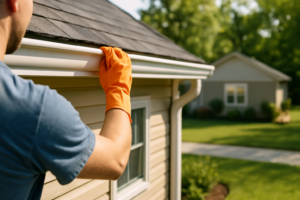
- Clear gutters before winter — Clean gutters allow meltwater to drain freely rather than back up at the eaves
- Install ice and water shield underlayment — During any roof replacement, specify a self-adhering membrane at the eaves that prevents backed-up water from penetrating the deck
- Use a roof rake after heavy snow — Carefully removing the bottom few feet of snow from the eaves reduces the meltwater volume that reaches the cold zone
These steps reduce risk but don’t eliminate it entirely. Older homes in Auburn, Seattle, and Bellevue with complex rooflines and aging insulation may still experience ice dam events despite reasonable preventive measures.
When to Call Premier Water Removal for Ice Dam Water Damage
The decision point is simpler than most homeowners think. If water has entered your home through a roof leak — regardless of whether an ice dam caused it — the interior requires professional assessment and drying. Surface drying with fans and towels does not reach moisture in wall cavities, attic insulation, or structural framing. Schedule your free consultation today — call (253) 400-5633 or email office@premierwaterremoval.com.
What the Response Process Looks Like
Premier Emergency Water Removal has served Auburn and the greater Seattle and Bellevue areas since 1998 — over 25 years of Pacific Northwest water damage experience. As an IICRC-certified restoration company, our technicians arrive with moisture meters, thermal imaging capability, and commercial drying equipment to map the full extent of water intrusion — not just the visible surface damage. Psychrometric assessments are conducted on-site to guide a drying plan built around actual moisture readings, not a generic timeline.
The process begins with a free moisture analysis to establish where water has traveled and how deeply materials are saturated. Structural drying, attic drying, and mold remediation are handled as connected parts of a single restoration scope — not separate jobs requiring separate calls.
24/7 Emergency Dispatch Across King, Pierce, and Kitsap Counties
Winter storms don’t follow business hours. Premier operates a 24/7 emergency dispatch line (separate from standard office hours) with a roughly 60-minute on-site response target for most locations within our service area — including Seattle, Auburn, Bellevue, Tacoma, Olympia, Lakewood, and surrounding communities in King, Pierce, Kitsap, Mason, and Thurston counties.
Rated 4.4 stars across 105 Google reviews, and recognized as a preferred vendor by major insurance carriers, Premier brings both the technical capability and the insurance-claim experience that an ice dam water damage event requires. BBB Accredited.
Don’t wait for the ceiling stain to dry on its own. Ice dam water damage that isn’t professionally dried creates ongoing structural moisture problems and mold risk. Contact Premier Emergency Water Removal for a free moisture analysis and 24/7 emergency response.
If your Seattle-area home has experienced an ice dam roof leak this winter — or if you’re seeing ceiling stains, attic moisture, or musty odors that appeared after a cold snap — contact Premier Emergency Water Removal. Our IICRC-certified team handles emergency water damage restoration, structural drying, attic restoration, and mold remediation across the Puget Sound region. Get a quote today — call (253) 400-5633 or reach us at office@premierwaterremoval.com. Your peace of mind is one call away.
Frequently Asked Questions: Ice Dam Roof Leak Water Damage in Seattle
How quickly can mold grow after an ice dam roof leak?
According to EPA guidance on mold in buildings, mold can begin to grow on wet materials within 24 to 48 hours of water intrusion. Attic spaces are especially vulnerable because they are unheated and rarely inspected. Professional moisture assessment and drying should begin as soon as water entry is discovered.
Does homeowners insurance cover ice dam water damage in Seattle?
Most standard homeowners insurance policies cover sudden and accidental interior water damage caused by an ice dam roof leak, provided the damage is not due to long-term neglect. Coverage for the ice dam removal itself or the roof repair varies by policy. Premier Water Removal provides direct insurance billing and full claims assistance to help document and manage your claim.
Does renters insurance cover water damage from a roof leak?
Renters insurance typically covers a tenant’s personal property damaged by water intrusion but does not cover the building structure. If an ice dam leak damages your belongings as a renter in Seattle or Auburn, your renters policy applies. Structural repairs are the landlord’s responsibility under their property insurance.
How fast can Premier Water Removal respond to an ice dam emergency in Seattle?
Premier Water Removal operates a 24/7 emergency dispatch line with a roughly 60-minute on-site response target for most locations within the service area, including Seattle, Auburn, Bellevue, and Tacoma. The emergency line is available around the clock, separate from standard office hours.
Is Premier Water Removal certified to handle structural drying and mold remediation?
Yes. Premier Water Removal is IICRC-certified and BBB Accredited. The team follows IICRC S500 drying standards and has served the Puget Sound region since 1998, with over 25 years of Pacific Northwest water damage restoration experience.
Related pages
Ice Dam Roof Leak Water Damage Seattle: Two-Part Response Plan — Side-by-side breakdown of the two separate scopes of work required after an ice dam event — roofing contractor vs. water damage restoration company — drawn directly from the article’s task table. infographic for Premier Water Removal