Crawl Space Cleaning: What’s Really Under Your Home
Most homeowners in the Auburn, WA area never look in their crawl space — and that’s exactly the problem. In the Pacific Northwest, where ground moisture levels stay elevated for much of the year, crawl spaces take a beating. Damaged or fallen insulation, standing water, rodent activity, and mold growth can all develop quietly under a home for months or years before any visible signs appear above the floor. By the time a homeowner notices a musty odor or a soft spot in the flooring, the problem is usually well established.
Crawl space cleaning isn’t a cosmetic service. It addresses conditions that directly affect indoor air quality, structural integrity, and energy efficiency — all of which have a real impact on the livability and value of a home.
Why Crawl Spaces in the Puget Sound Region Are High-Risk
The greater Seattle area’s climate creates conditions that make crawl spaces particularly vulnerable. Heavy seasonal rainfall, clay-heavy soils that retain water, and the natural grade of many residential lots in neighborhoods throughout Auburn and surrounding communities all contribute to moisture accumulation beneath homes.
Vented crawl spaces — the traditional construction standard in older Pacific Northwest homes — were designed to allow airflow that would reduce moisture. In practice, venting often introduces more humid outdoor air than it removes, especially during wet seasons. The result is a damp environment that supports mold growth, wood rot, and pest activity year-round.
Homes with compromised or missing vapor barriers are especially susceptible. Ground moisture evaporates upward through exposed soil, raising humidity levels inside the crawl space and, through the stack effect, pulling that air up into the living areas of the home.
What a Professional Crawl Space Cleaning Actually Involves
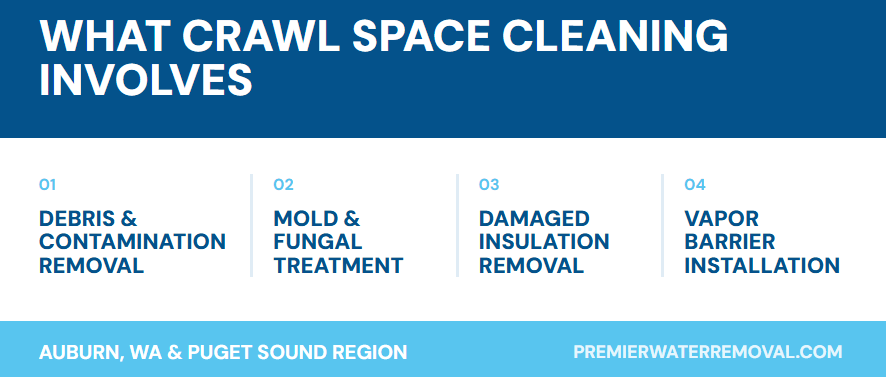
The term “crawl space cleaning” covers a range of work depending on what’s been found during inspection. A thorough cleaning by a qualified restoration team typically addresses several areas:
Debris and Contamination Removal
Fallen insulation, rodent droppings and nesting material, standing water, and any organic debris are removed first. This is the baseline step — no other work is effective until the space is cleared and the source of contamination is identified.
Mold and Fungal Growth Treatment
Mold on floor joists, subfloor sheathing, and wood framing is a common finding in neglected crawl spaces. Remediation involves applying EPA-registered antimicrobial treatments to affected surfaces, removing materials that can’t be effectively treated, and addressing the moisture source that allowed growth to occur. Skipping this step and simply cleaning around mold does not resolve the problem.
Damaged Insulation Removal and Replacement
Insulation that has absorbed moisture, fallen from between joists, or been disturbed by rodents loses its effectiveness and becomes a reservoir for mold and bacteria. Saturated or contaminated insulation needs to be removed before any encapsulation or vapor barrier work is done.
Vapor Barrier Inspection and Installation
A properly installed vapor barrier — a heavy-gauge polyethylene liner covering the ground — is one of the most effective tools for managing crawl space moisture. If the existing barrier is torn, improperly overlapped, or absent, ground moisture will continue to evaporate into the space regardless of other work done. Premier Emergency Water Removal offers crawl space vapor barrier and insulation services as part of a complete remediation approach.
The Connection Between Crawl Space Conditions and Indoor Air Quality
A home’s air doesn’t stay neatly separated by floor. The stack effect — where warm air rises and escapes through the upper levels of a home — draws replacement air from below. In a home with a vented crawl space, a meaningful percentage of the air circulating through the living areas originates from beneath the floor.
When that crawl space contains mold spores, rodent allergens, or decomposing organic material, those contaminants travel with the air. Homeowners dealing with persistent allergy symptoms, unexplained musty odors, or poor HVAC performance are sometimes tracing the problem to a crawl space that hasn’t been properly maintained or cleaned.
Addressing crawl space conditions can also support the effectiveness of whole-home dehumidification — a crawl space that continues to introduce moisture into a home’s air will undermine any dehumidification efforts on the floors above.
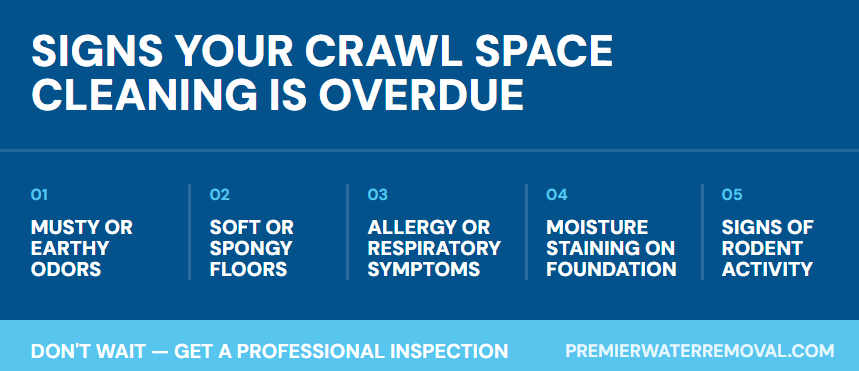
Signs a Crawl Space Cleaning Is Overdue
Homeowners don’t need to inspect the crawl space themselves to recognize warning signs. Some of the most common indicators that something is wrong beneath the floor include a persistent musty or earthy odor — particularly noticeable in rooms on the ground floor or near HVAC returns — floors that feel soft, spongy, or uneven, increased allergy or respiratory symptoms among household members with no other identified cause, visible moisture staining or efflorescence on the foundation walls, and evidence of rodent activity such as droppings near vents or foundation penetrations.
Any of these signs warrants a professional inspection. Premier Emergency Water Removal’s technicians can assess crawl space conditions, document what’s present, and outline what cleaning and remediation work is needed — before the scope expands further.
For homes that have experienced any water intrusion event in the past, a crawl space inspection is particularly valuable. Water from a burst pipe, appliance leak, or flooding event that reached the crawl space may have caused damage that was never fully addressed. Crawl space drying following a water event is a separate but related service that is often required before cleaning and restoration work can begin.
Frequently Asked Questions About Crawl Space Cleaning
How often should a crawl space be professionally cleaned?
There is no single universal answer, but most restoration professionals recommend a crawl space inspection every one to three years for homes in the Pacific Northwest. Homes in Auburn, WA and the greater Puget Sound area with vented crawl spaces, older vapor barriers, or a history of water intrusion benefit from more frequent assessment. After any plumbing event, flooding, or rodent activity, an inspection should be scheduled promptly rather than waiting for the next routine check.
Can crawl space mold spread to the rest of the house?
Yes. Mold spores are microscopic and travel freely through air movement. In a home where the stack effect draws air upward from the crawl space, active mold growth beneath the floor can contribute to elevated spore counts throughout the living areas. This is one of the primary reasons crawl space mold remediation should be handled by a qualified professional rather than treated as a minor cleaning task. Premier Emergency Water Removal’s team addresses both the mold itself and the moisture conditions that allowed it to develop — visit the mold remediation and removal service page for more detail on that process.
What is the difference between crawl space cleaning and crawl space encapsulation?
Crawl space cleaning refers to the removal of debris, contaminated insulation, mold, and other material from the space. Encapsulation is a moisture control measure — it involves lining the crawl space floor and walls with a heavy-duty vapor barrier, sometimes combined with sealing vents and installing a dehumidifier. Cleaning typically needs to happen before encapsulation is effective. Installing an encapsulation system over mold-contaminated framing or wet insulation does not remediate the underlying problem; it simply covers it.
Will homeowner’s insurance cover crawl space cleaning and mold remediation?
Coverage depends on the cause of the damage and the specific policy. Mold or deterioration that developed gradually over time is generally not covered under standard homeowner’s policies. However, if the crawl space damage is directly tied to a covered water event — such as a burst pipe or appliance failure — the resulting mold or structural damage may be included in the claim. Premier Emergency Water Removal’s project managers can help document the extent and origin of damage, which is often the most important factor in determining whether a claim is viable. Homeowners are also not required to use a contractor selected by their insurance company.
Does Premier Emergency Water Removal serve the Auburn, WA area for crawl space cleaning?
Yes. Premier Emergency Water Removal is based in Auburn, WA and has been serving homeowners throughout the greater Puget Sound area since 1998. The company’s IICRC-certified technicians handle crawl space cleaning, mold remediation, vapor barrier installation, and related water damage restoration services across Auburn and surrounding communities including Covington, Lakewood, and the broader Seattle metro area. The team is available 24/7 for emergencies.