Basement Drying After a Sump Pump Failure
A sump pump does its job quietly — until the power goes out, the float switch sticks, or the unit simply fails during one of the Pacific Northwest’s heavy rain events. In the time it takes to notice the problem, a basement can accumulate several inches of standing water. For homeowners in Auburn, WA and the surrounding Puget Sound area, that scenario is more common than most people expect. The question isn’t just how to remove the water — it’s how to properly dry the space before secondary damage sets in.
Why Basement Drying After Sump Pump Failure Is Different
Not all basement water intrusion is the same. A sump pump failure typically means the water has been sitting — sometimes for hours — before anyone discovers it. That sitting water migrates. It wicks into concrete block walls, saturates drywall from the bottom up, soaks subflooring and any wood framing at the base of the walls, and seeps beneath floor slabs.
The visible standing water is only part of the problem. Moisture that has absorbed into porous building materials will continue to cause damage long after the puddles are gone. That’s why extraction alone is not enough — and why the drying process requires more than a few box fans.
The IICRC S500 standard, which guides water damage mitigation professionals, classifies water damage by category and class. A sump pump failure typically involves groundwater or stormwater, which affects how the drying protocol is structured and what moisture targets must be reached before a space is considered dry.
The Basement Drying Process: What Proper Mitigation Looks Like
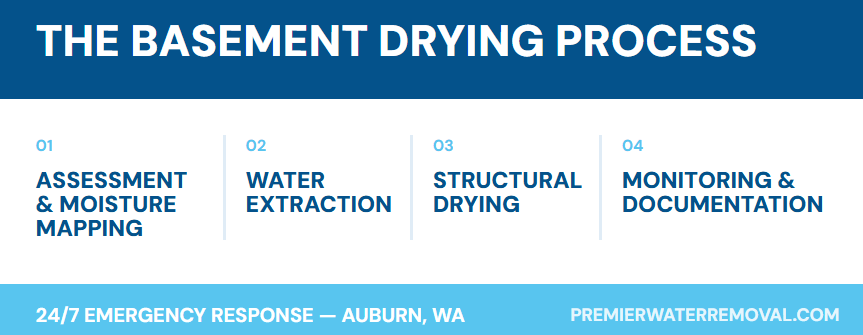
Premier Emergency Water Removal uses a structured approach to basement drying that follows IICRC guidelines. The process involves several key phases:
Assessment and Moisture Mapping
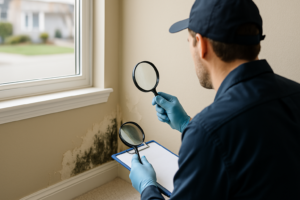
Technicians use thermal imaging cameras and moisture meters to map the extent of water intrusion — including areas that aren’t visibly wet. This step is critical. Water travels, and without knowing where it has gone, drying efforts can miss saturated materials that later develop mold growth.
Water Extraction
Truck-mounted and portable extraction units remove standing water quickly. The faster water is extracted, the lower the classification level of the damage — which directly affects how long and intensive the structural drying process needs to be.
Structural Drying
Industrial-grade air movers and commercial dehumidifiers are positioned based on the moisture map readings. The goal is to create an airflow pattern that accelerates evaporation from all affected materials. In a basement setting, that often means addressing concrete floors, bottom plates, wall cavities, and the HVAC system if it has been affected.
Monitoring and Documentation
Drying is not a set-it-and-forget-it process. Equipment is checked and adjusted daily, and moisture readings are logged throughout. This documentation matters for insurance claims and confirms that materials have reached acceptable dryness standards before reconstruction.
Mold Growth Starts Faster Than Most Homeowners Realize
Mold can begin to develop on wet materials within 24 to 48 hours under the right conditions. Basements — with limited airflow and higher ambient humidity — are particularly vulnerable. In the greater Auburn area, where seasonal rainfall keeps outdoor humidity elevated, a wet basement is a high-risk environment.
Proper basement drying eliminates the moisture that mold needs to establish. If remediation is delayed or drying is incomplete, mold remediation becomes a separate — and more involved — scope of work. Addressing the moisture problem correctly the first time is significantly less disruptive.
Premier Emergency Water Removal handles both water mitigation and mold remediation. If mold is discovered during the drying process, the response doesn’t require starting over with a different contractor — the team is already on site and equipped to address it. Learn more about the company’s mold remediation and removal services.
What to Do Immediately After a Sump Pump Failure
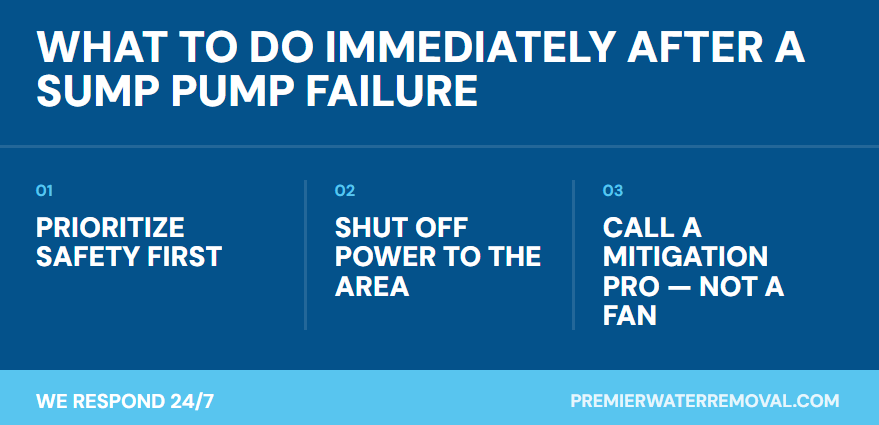
If the sump pump has failed and water has entered the basement, the priority is safety first. Do not enter the basement if there is a risk of electrical exposure. If the area is safe to enter, the following steps apply:
Shut off power to the affected area if possible and safe to do so. Contact a plumber or electrician before re-entering if outlets, wiring, or the electrical panel were near the water. Call a water damage mitigation company before attempting to dry the space with household fans — moving air across standing water before extraction spreads contamination and moisture into unaffected areas.
Premier Emergency Water Removal responds to water emergencies 24 hours a day, seven days a week, serving Auburn, WA and communities throughout the greater Puget Sound region. Fast response reduces the scope of damage and limits the cost of mitigation.
Homeowners dealing with basement flooding should also review information about sump pump failure services and basement waterproofing options to reduce the risk of repeat flooding events.
Frequently Asked Questions About Basement Drying After Sump Pump Failure
How long does basement drying take after a sump pump failure?
The drying timeline depends on how long the water was sitting, how deep it was, and what materials were affected. Most residential basement drying jobs take between 3 and 5 days when professional equipment is used and the process begins promptly. Concrete takes longer to dry than drywall, and wall cavities require additional time. Moisture readings guide the process — drying is complete when materials reach acceptable standards, not on a fixed schedule.
Will my homeowner’s insurance cover basement flooding from a sump pump failure?
Coverage depends on the specific policy. Many standard homeowner’s insurance policies do not cover flooding from groundwater or sump pump overflow unless a separate water backup endorsement has been added. Damage from a sudden and accidental pipe burst, for example, is often treated differently than a sump pump failure. Premier Emergency Water Removal’s project managers can help document the damage and work with your insurance company to determine what is covered. Homeowners also have the right to choose their own restoration contractor — they are not required to use a company recommended by the insurance carrier.
Can I dry a flooded basement myself with fans and a dehumidifier?
Household fans and consumer dehumidifiers do not generate the airflow or moisture removal capacity needed for structural drying. They can provide a false sense that the problem has been addressed while hidden moisture continues to damage wall framing, subflooring, and concrete. Without moisture meters and thermal imaging, there is no reliable way to know whether materials have dried to acceptable levels. Incomplete drying is one of the leading causes of mold growth following a water damage event.
How do I know if mold has already started growing after my basement flooded?
Visible mold growth on walls, floors, or stored items is an obvious indicator, but mold often begins in concealed areas first — inside wall cavities, beneath flooring, and behind insulation. A musty odor is frequently the first detectable sign. If the basement flooded more than 24 to 48 hours before mitigation began, or if a previous water event was not professionally dried, a mold inspection is a reasonable precaution. Premier Emergency Water Removal’s team can assess moisture conditions and identify areas that warrant further evaluation.
Does Premier Emergency Water Removal serve areas outside of Auburn, WA?
Yes. Premier Emergency Water Removal is based in Auburn, WA and serves the greater Puget Sound area including Covington, Lakewood, and surrounding communities. The company has been operating in the greater Seattle area since 1998 and dispatches crews 24/7 for emergency water damage situations.