What Happens to Your Home After a Fire: Immediate Risks Homeowners Should Know
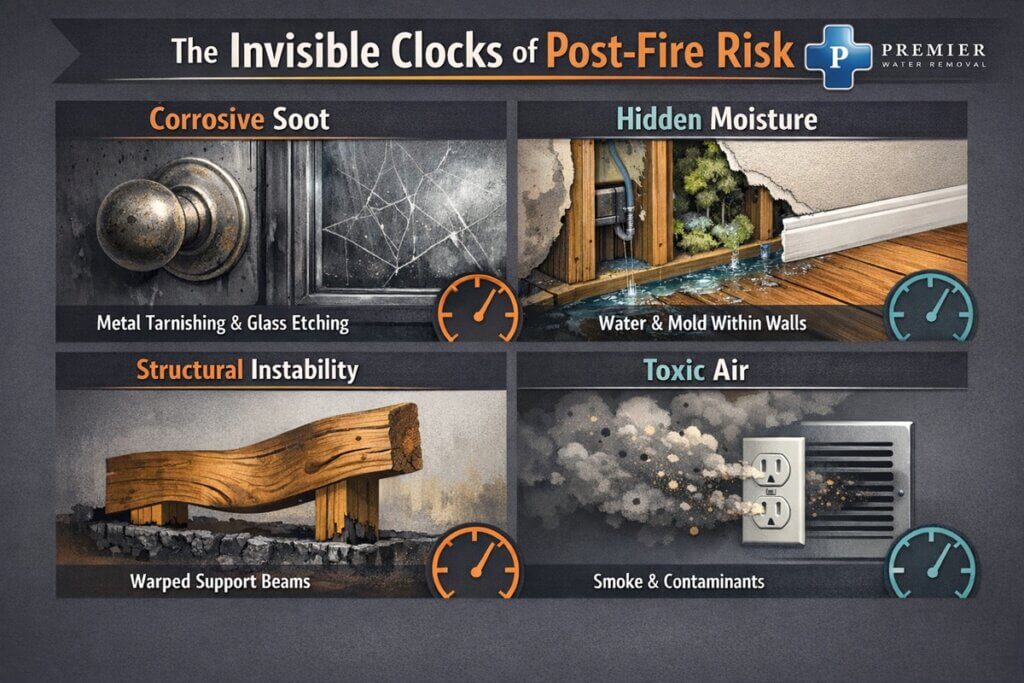
The silence that follows a house fire is often more unsettling than the roar of the flames. Once the sirens fade and the smoke clears, homeowners in the Pacific Northwest face a reality that feels both alien and overwhelming. You stand on the sidewalk looking at a structure that was once your sanctuary, now transformed into a complex site of chemical reactions and structural instability. Many people assume the danger ends when the last ember is extinguished, yet the true risks to your property and health are just beginning to surface. This period is a race against invisible clocks involving corrosive soot, trapped moisture, and compromised architecture.
Identifying immediate hazards is essential to restoring your home and keeping your family safe from hazards during the restoration process. This guide will address some of the hidden dangers that may still exist in the air or on the walls of your Seattle home following a fire. We will discuss the residual effects of acidic deposits and the potential for changing the structural integrity of a house, even if the fire didn’t directly affect that area, as well as the residual negative effects caused by the water used to extinguish the fire. By the end of this article, you’ll have a detailed plan for navigating the Fire Damage Restoration in Seattle, as well as an understanding of why a professional fire restoration company is necessary to fully restore your property.
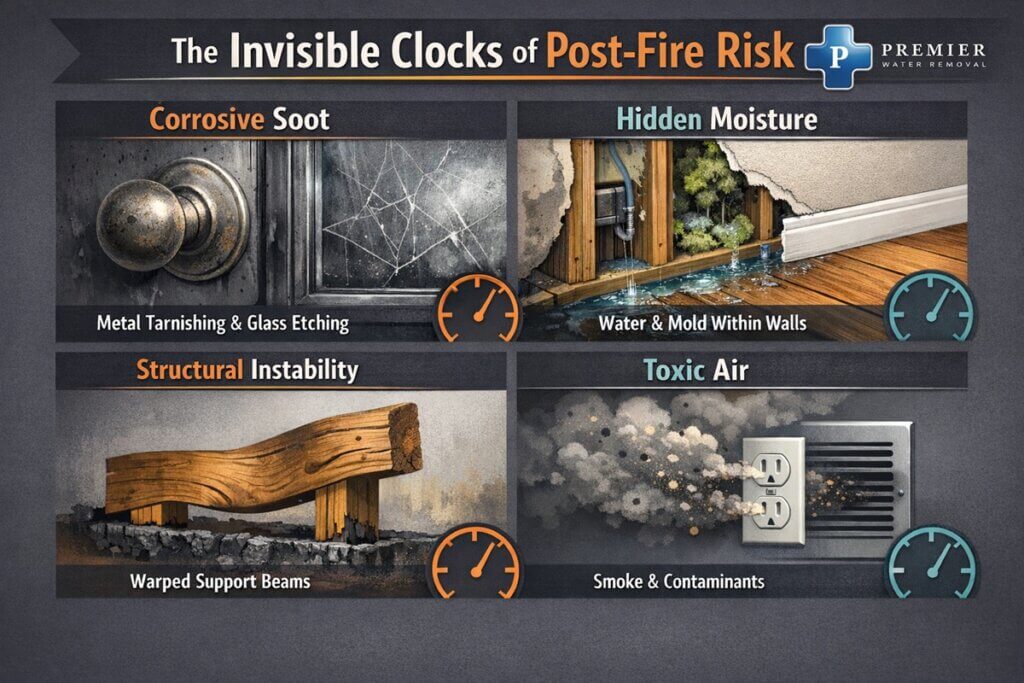
The Silent Corrosive Power of Soot and Smoke
Smoke isn’t just a gray cloud; it’s a cocktail of carbon, chemicals & unburnt material. Smoke from your modern belongings (electronics, plastics, synthetic textiles) contains toxic particles that look like tiny pieces of glass. When these particles land, they’re highly acidic and start eating away at whatever surface they land upon instantaneously. If the soot is not cleaned within a few days, it will permanently etch glass, tarnish metal, and stain porous stone/marble.
Because of the Puget Sound’s humid climate, the moisture in the air will accelerate the reaction of the acids and the soot. The moisture combines with the acidic soot to create a paste that adheres to wall surfaces / embedded deeply into carpet fibers. That’s why the scent of a fire lingers long after the flames are extinguished. The scent is from the deep-seated particles that have penetrated the pores of your home. Professional Fire Damage Restoration Seattle uses specialty equipment (hydroxyl generators and thermal foggers) to eliminate a fire smell at the molecular level.
Structural Instability Beyond the Charred Wood
A common misconception is that if a room does not look burned, it is safe to enter. Fire produces immense heat that radiates through the framing of a house, often reaching temperatures that can change the molecular structure of steel and wood. Even if a support beam is not charred, the extreme heat can cause it to warp or lose its load-bearing capacity. This creates a risk of sudden ceiling collapses or floor failures that can injure unsuspecting homeowners trying to salvage their belongings.
The integrity of both your electrical system and your plumbing system may be compromised, but you will not see the problems with your naked eye. If the plastic insulation on the wiring melts inside a conduit, it could start a fire if you were to turn the power back on too soon. In addition, if your PVC piping gets too hot or it cracks, you could have an undetected leak behind the wall. Coverage of both purchased items appears to require an expert assessment to be certain the structure is stable and intact before anyone enters a property for clean-up.
The Paradox of Water Damage After a Fire
The very element used to save your home often introduces a new set of problems. Firefighters use thousands of gallons of water to suppress a blaze, which saturates everything from the attic to the crawlspace. In our local environment, where the air is often saturated with moisture, this excess water does not simply evaporate. It seeps into floorboards, wicks up into drywall, and pools in areas where it can remain hidden for weeks.
This leads to an immediate threat of mold growth. Mold spores are opportunistic and can begin to colonize damp surfaces within twenty four to forty eight hours. When you combine the organic material of charred wood with high moisture levels, you create the perfect nursery for fungal growth. This is why seeking Fire Damage Restoration Near Me is about more than just cleaning soot; it is about comprehensive moisture management. Dehumidification and high-speed air movers must be deployed immediately to prevent a fire loss from turning into a massive mold infestation.
Respiratory Hazards and the Indoor Air Environment
Walking into a fire-damaged home without a respirator is a significant health risk. The air remains thick with volatile organic compounds and fine particulate matter that can lodge deep in the lungs. These toxins are not just present in the immediate vicinity of the burn site. Smoke is pressurized by heat, forcing it through electrical outlets, plumbing cutouts, and into the HVAC ductwork. Every time you walk through the house, you kick up these settled toxins, breathing them in.
For families in Seattle, where indoor air quality is already a focus during wildfire seasons, the concentration of toxins after a residential fire is exponentially higher. This particulate matter can trigger asthma attacks, cause long-term respiratory issues, and irritate the eyes and skin. Professional cleaners use HEPA filtration and air scrubbers to clean the environment, ensuring that the air you breathe is free from the remnants of the combustion process. Recovering your home means making it a healthy place to live once again.
Managing the Psychological and Logistical Burden
Following a fire, when an individual is coping with the subsequent increased stress and decision-making fatigue, they will have discussions with their insurance company and will need to organize temporary housing, while all along feeling overwhelmed by the technical aspects of the recovery/remediation/restoration of their home. Within those first few days, the decisions made will dictate if their home is going to be repaired properly or if it is going to suffer from permanent damage. Fastest action = no permanent damages caused by soot and moisture or structural deterioration resulting from the damages.
You will need a restoration company that has experience working with the local market and the unique environmental conditions associated with the Northwest. You must choose a company that can coordinate the actions taken during and after the emergency, and after the fire is put out and the final finish coat of paint is applied. If your restoration contractor is addressing soot, moisture, and structural issues at the same time, the overall cost of your restoration project is going to be reduced, and you are less likely to find hidden defects that may appear years later.
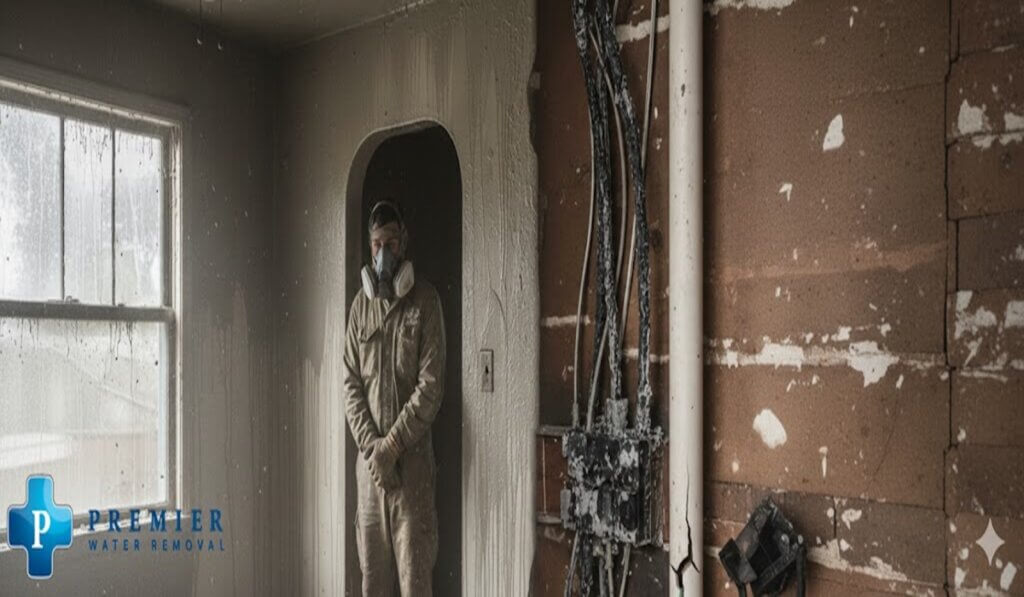
Rebuilding With Confidence in Seattle
Recovery is a journey that requires patience and expertise. While the sight of your home in disarray is painful, the technology available today for restoration is more advanced than ever. From ultrasonic cleaning of delicate items to advanced structural drying techniques, it is possible to reverse much of the damage caused by both fire and water. The goal is to strip away the layers of destruction to reveal the solid foundation underneath.
At Premier Emergency Water Removal, we have seen firsthand how resilient Seattle homeowners are. We know that your property is more than just an asset; it is the backdrop of your life. Our approach focuses on thoroughness and transparency, ensuring that every risk factor is identified and mitigated. Whether it is neutralizing the smell of smoke or drying out a flooded basement, we provide the technical skill needed to navigate this difficult transition.
The immediate risks of fire are significant, but they are manageable with the right knowledge and support. By acting quickly to address the acidity of soot and the presence of moisture, you protect your investment and the health of those you love. Remember that you do not have to face this process alone. There are experts ready to guide you through the wreckage toward a fresh start.
Contact Premier Emergency Water Removal today to secure your property and begin the professional restoration process for your Seattle home.