Debunking Hardwood Floor Drying Myths: Why DIY Solutions Can Be Risky?
Have you ever wondered whether utilising an air-drying process to dry hardwood floors after water has reached them is satisfactory? Or perhaps you’ve been told that turning the heat on or using a household fan is sufficient?
Countless Auburn homeowners have been misinformed about how hardwood floors dry after flooding or leaking; however, hardwood is porous, sensitive to moisture, and requires dedicated drying methods. When people take matters into their own hands, they could be left with worse consequences; specifically, warping, mold, and permanent structural damage to the floor.
This blog is going to dispel fact from fiction by highlighting the most common hardwood drying myths, explaining why do-it-yourself methods can be dangerous, and how a professional restoration company in Auburn can save your home from long-term damage.
Myth Number 1: “Hardwood Floors Will Dry Without Any Help”
One of the biggest and most dangerous myths is that hardwood will dry out on its own if you just give it enough time. While it is possible that some surface moisture could evaporate, moisture will most likely continue to permeate into the wood fibers and subfloor.
If this moisture is not treated, it can cause the boards to swell, cup, and buckle. This could also allow colonies of mold to form under the flooring without any indication. Oftentimes, by the time Auburn homeowners discover they have an issue, there has already been enough time for significant amounts of damage to happen, and it can ultimately cost a lot of money to repair.
Myth Number 2: “Household Fans Will Work Fine”
Most do-it-yourself efforts just have you putting up some box-type or ceiling fans to dry hardwood floors. Unfortunately, while airflow is a great thing, it doesn’t get into the deeper surface of the wood or subfloor where trapped water is still located.
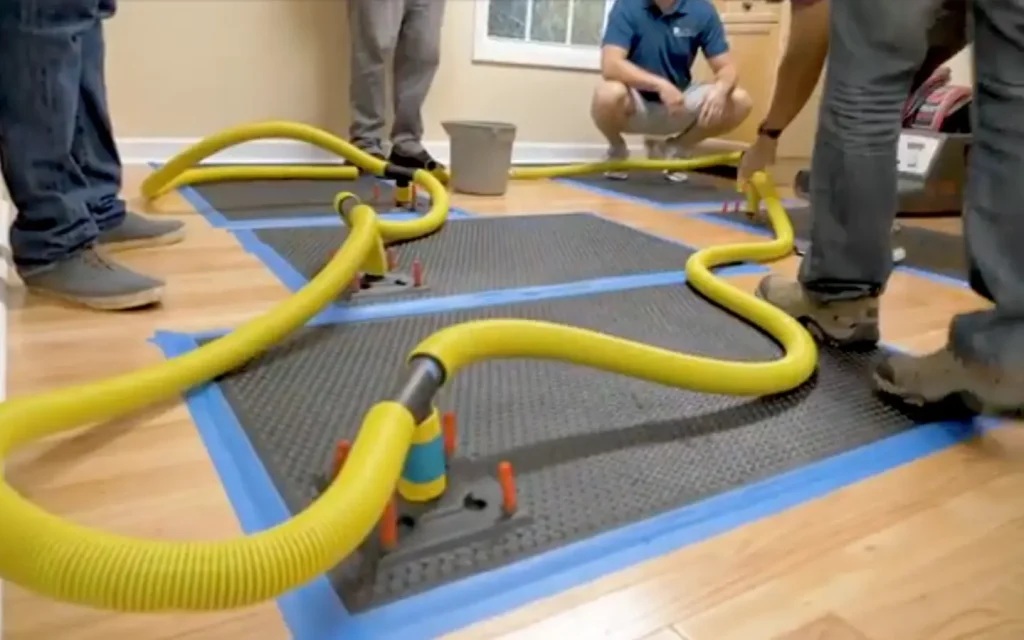
To pull the deep water, you need professional equipment and dehumidification techniques (high-efficiency dehumidifiers, specialized hardwood floor drying systems, etc.). You cannot dry wood effectively with a household fan.
Myth Number 3: “Turning up the Heat Helps Dry it Faster.”
It is very commonly believed that by turning up your thermostat and/or using a space heater, you will dry the hardwood out quicker. This is, again, false. Heating does dry; however, if you heat the hardwood too much, it will dry unevenly. This can have a damaging effect on the wood, with cracks and warping. Worse yet, it still won’t resolve the fact that your board system is wet.
It is best to use controlled and regulated drying. Low-and-slow dehumidification is both better and safer. Trying to expedite this process normally backfires.
Myth Number 4: “Remediation = Replacement”
Most homeowners think that if their hardwood floor gets wet, they will get new flooring at some point, and in some cases, that is true. However, with proper drying, a water damage restoration service in Auburn may return water-damaged hardwood flooring to a serviceable condition instead of replacing it with a new floor.
Once experienced professionals show up with adequate equipment, they can often extract the moisture, help stabilize the product, and potentially restore the hardwood to look like it was just installed. Replacement should be a last resort, not a first thought.
Myth Number 5: “Doing it Yourself (DIY) Will Save You Money”
It’s conceivable that you might save money if you dry out the hardwood flooring yourself. But if it doesn’t work, or if more repairs are needed beyond just drying out the floor, you could incur far more costs exponentially above what it would cost to have a proper drying operation, complete remediation.
What could start as a couple of hundred dollars could blow, unfortunately, and very quickly, into thousands of dollars to remediate everything that was damaged. Ultimately, in many instances, you could incur costs because you needed structural repairs, mold remediation, and/or replacement.
Often, it is far more affordable in the long term to provide professional mitigation work from the outset.
The Dangers of DIY Hardwood Floor Drying
Mold
Mold thrives in a moist environment. Unfortunately, there are plenty of areas for mold to hide in hardwood. If you dry out hardwood through DIY methods, it is fairly unlikely that proper removal of moisture will occur, leaving the potential for mold to spread throughout your home, which could create a health risk.
Structural Damage
Once moisture begins to wick its way to the subfloor, the structural components, such as floor joists, will begin to degrade over time. Generally speaking, DIY methods will rarely, if ever, successfully remove moisture from the subfloor, leaving the potential for weak spots in the flooring system to develop.
Aesthetic Damage
If the drying conditions are not monitored correctly and for the appropriate length of time, improperly drying the flooring on-site can lead to it looking cupped, warped, or discolored. These aesthetic damages are generally irreversible unless you seek professional assistance.
Trapped Moisture
When a hardwood floor feels dry one day, it may not be dry when tested with a professional moisture gauge. Most moisture gauges will indicate moisture ranges deep into the board. If the source of moisture is not eliminated, it will continue to decay.
The Importance of PROFESSIONAL Restoration
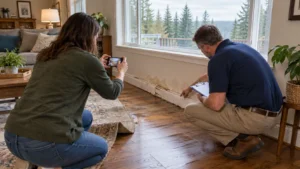
When hardwood flooring comes into contact with water from plumbing leaks, overflowing appliances, or flooding, your best option is to contact a professional service. A professional service will not only look for surface drying and do the best they can – they will use proven methods.
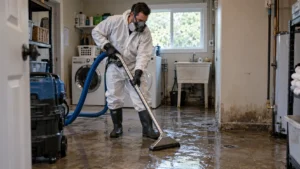
For example, during flood damage cleanup in Auburn, the restoration team can put drying systems in place, map the moisture, and provide antimicrobials to allow much better drying overall. This process is vital for restoring your floors and ensuring that the remaining structure of the home remains stable and intact from secondary damage.
Emergency Water Restoration Can Save Your Hardwood Floors
When water impacts hardwood flooring, timing is everything. Using hardwood floor drying in Auburn, trained technicians can arrive quickly to minimize as much damage as possible to your hardwood floors.
The first thing they will do is remove all standing water and then provide controlled drying with moisture meters indicating if the wood has dried to safe moisture levels. The fast response will help minimize permanent warping and delay mold growth, and hopefully will help the homeowner save their hardwood floors.
Conclusion
A hardwood floor is probably the most admired and cherished feature of any home, but it is also one of the most vulnerable to water damage. Due to a number of myths, homeowners have bought into the idea of doing it yourselves when drying hardwood floors, putting out some fans or heat, or leaving it for a few days, usually without awareness of all the hidden moisture actually ruining their floors and giving a false sense of security.
The simple reality is that professional restorations are the only guarantee to save hardwood flooring after water exposure. And with clean-up from flood damage in Auburn or refinishing, restoration experts have the right gear, experience, and knowledge to save your investment.
So, the next time something jeopardizes your hardwood floors, don’t fool yourself, trust the professionals who know how to properly restore your hardwood floors.
About Premier Emergency Water Removal Auburn
Premier Emergency Water Removal is specialist in assisting Auburn homeowners with water damage. We offer services for Emergency Water Restoration Auburn, hardwood floor drying after floods, mold prevention, and complete Water Damage Restoration Auburn services.
With teams available 24 hours a day, 7 days a week, and the best in water damage restoration equipment, we can handle your home water damage professionally and efficiently.
If you are looking for emergency water removal services in Auburn, feel free to contact us today.